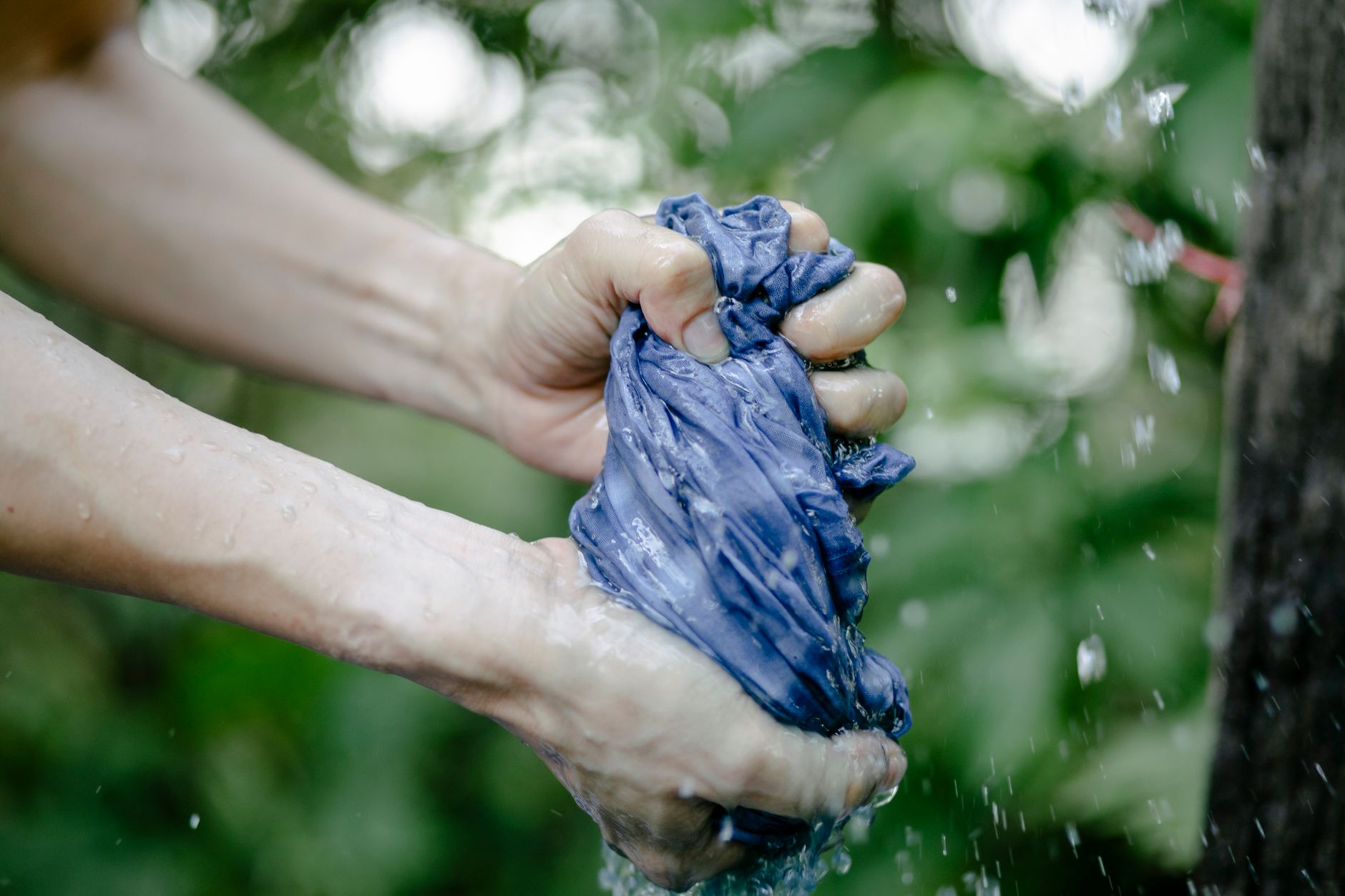
- Daily Grip Strength Longevity Exercise #1: The Wet Towel Wring
- Daily Grip Strength Longevity Exercise #2: Loaded Grocery Bag Farmer's Carry
- Daily Grip Strength Longevity Exercise #3: Heavy Book Pinch Grip Hold
- Daily Grip Strength Longevity Exercise #4: Rubber Band Finger Extensions
- Daily Grip Strength Longevity Exercise #5: Dead Hang from a Doorframe Pull-Up Bar
- The 5-Minute Daily Grip Routine: Stack It Onto What You Already Do
- Want the Full Longevity Exercise Picture?
Your doctor checks your blood pressure at every visit. They weigh you, listen to your heart, maybe order bloodwork. But there’s one health marker with stronger predictive power than blood pressure that almost nobody measures outside a research lab: how hard you can squeeze your hand.
Handgrip strength has become one of the most consistently replicated longevity biomarkers in clinical research. The data is blunt. A landmark study of nearly 140,000 adults published in The Lancet found that grip strength was a stronger predictor of all-cause and cardiovascular mortality than systolic blood pressure.
The problem is that when most people search for how to improve grip strength, they land on bodybuilding articles about forearm curls, wrist rollers, and heavy deadlifts. None of which helps if you’re just a regular person trying to stay functional and independent for the next 30 years.
This guide skips the gym entirely. You’ll get five exercises using items you already own, a five-minute daily habit you can stack onto your morning routine, and the specific science that makes grip strength worth taking seriously at any age.
Daily Grip Strength Longevity Exercise #1: The Wet Towel Wring
This is the most underrated grip exercise in existence. It requires one hand towel, a sink, and about 90 seconds.
Soak a small towel in water, take hold of it at each end, and twist in opposite directions to wring the water out. Reverse the directions and repeat several times. This exercise uses the hand flexors and extensors to improve grip power and forearm endurance.
The wet towel is harder than it sounds. The water resistance creates a dynamic load that changes throughout the movement, forcing your hands to continuously adjust and recruit stabilizing muscles that dry-grip exercises miss entirely. It also trains both the crushing grip (closing the hand) and the extensors (opening the hand)—a balance that most grip training ignores.
How to do it:
- Wet a hand towel thoroughly, hold one end in each hand
- Twist clockwise until you can’t wring any more water out
- Reverse and twist counterclockwise back to neutral
- That’s one rep; perform 3–5 reps per set, 2–3 sets
- Alternate which direction you start with each session
If you want to take this further without buying equipment, a thicker towel dramatically increases the difficulty—the wider the grip surface, the harder your hands have to work to maintain control.
For a portable, purpose-built version of this concept, a silicone grip strengthener with variable resistance levels gives you the same crushing and endurance benefit with measurable progression.
👉 Check price: 4 Pack Finger Exerciser Grip Strength Trainer on Amazon
Daily Grip Strength Longevity Exercise #2: Loaded Grocery Bag Farmer’s Carry
Grocery bag farmer’s walks are one of the best household grip exercises available. Use reusable bags loaded with anything heavy—canned goods, water bottles, books—and either walk around the house or simply stand holding them for time.
The farmer’s carry is the most functional grip exercise that exists because it’s exactly what your hands need to do in real life: sustain a loaded grip for an extended period while your body moves. This is the grip pattern behind carrying shopping bags, lifting suitcases, picking grandchildren up, and every other real-world task that becomes harder as you age.
What makes it especially effective for longevity is the systemic load. Carrying heavy bags engages your grip, forearms, shoulders, upper back, and core simultaneously. Your cardiovascular system gets a mild aerobic stimulus. Your postural muscles stay active throughout. It’s a full-body functional exercise that happens to look like you’re just walking from your car to the kitchen.
How to do it:
- Fill two reusable grocery bags to 15–25 lbs each (adjust for your current strength)
- Hold one in each hand and walk a circuit of your home or stand for 30–60 seconds
- Set them down, rest 45 seconds, repeat 3–5 times
- Progress by adding weight or increasing carry duration over time
As you get stronger, switching to a single heavier bag and walking it on one side at a time introduces an anti-lateral-bend demand on your core that makes the carry even more effective.
For a purpose-built, grip-specific version, a pair of thick-handled kettlebells lets you progressively load the same carry pattern with more precision than grocery bags allow.
👉 Check price: Yes4All Kettlebell Set on Amazon
Daily Grip Strength Longevity Exercise #3: Heavy Book Pinch Grip Hold
Most grip work targets your crushing strength—the force of closing your hand around something. But the pinch grip (thumb against fingers, holding flat objects) is a separate strength quality that most people never train directly—and it’s one that degrades fastest with age and desk work.
Grab the biggest, heaviest book you have and hold it in a pinch grip position—fingers on one side, thumb on the other. For more challenge, walk the book in your hand by moving your fingers up and down the spine while holding it in mid-air.
This directly trains the intrinsic muscles of the hand and the thumb’s opposition strength—the same muscles you use for opening jars, turning doorknobs, handling tools, and any task where precision and pinch force matter. These are the muscles that most commonly fail first in functional tasks as people age.
How to do it:
- Start with one thick hardcover book (a dictionary or textbook works well)
- Pinch it firmly between your thumb and fingers at the spine, arm hanging at your side
- Hold for 20–30 seconds per hand, then switch
- Perform 3 sets per hand
- Progress by stacking two or three books together as the hold becomes easier
Stacking multiple books together and pinching them as a unit targets the pinch grip specifically, which is crucial for fine motor control and carrying flat objects.
Daily Grip Strength Longevity Exercise #4: Rubber Band Finger Extensions
This one sounds too simple to matter. It isn’t.
Your hand has two opposing muscle groups: the flexors (which close your hand and drive nearly all conventional grip exercises) and the extensors (which open your hand and are almost never trained deliberately). This imbalance contributes to overuse injuries, hand fatigue, reduced grip endurance, and the stiff, clawed hand posture that becomes common in older adults.
Rubber band extensions for the fingers target the hand extensor muscles—an easy exercise to do while on a phone call or watching TV. If one band gets too easy, add two or more.
How to do it:
- Place a rubber band or thick elastic band around all four fingers and your thumb (at the first knuckle)
- Spread your fingers open against the band’s resistance, then close slowly
- Perform 15–20 reps per hand, 2–3 sets
- Progress by stacking two bands or using a thicker band as strength improves
The goal is muscular balance: strong flexors and strong extensors equals a hand that stays healthy, pain-free, and functional for decades. Many people who develop repetitive strain issues or hand fatigue have strong closers but chronically weak openers.
Daily Grip Strength Longevity Exercise #5: Dead Hang from a Doorframe Pull-Up Bar
Of the five exercises here, the dead hang produces the most raw grip strength in the shortest time. It’s also one of the best indicators of where your grip currently stands.
The concept is simple: hang from a bar and hold on. Your full bodyweight becomes the resistance. Your hands, forearms, and shoulders have no choice but to engage completely or you fall. The duration you can sustain a dead hang correlates directly with functional grip strength and upper body pulling capacity.
For home use, a pull-up bar mounted in a doorframe turns a doorway into a grip training station. No screws required—most doorframe bars use tension pressure mounting.
How to do it:
- Grip the bar with an overhand grip, hands shoulder-width apart
- Let your body hang freely—no bending the elbows, no kipping
- Hold as long as possible; record your time
- Rest 60–90 seconds, repeat 2–3 times
- Aim to increase hang time by 5–10 seconds each week
Beginners often start at 10–20 seconds. A meaningful functional target for longevity purposes is reaching a 30–60 second dead hang. If doorframe bars feel unstable, start with a lower grip surface and progress from there.
Wrapping a towel around the bar before gripping dramatically increases difficulty by forcing your hands to hold an unstable, soft surface rather than a fixed one—building crushing grip strength faster than a standard bar.
👉 Check price: Iron Gym Total Upper Body Workout Bar (doorframe mount) on Amazon
The 5-Minute Daily Grip Routine: Stack It Onto What You Already Do
The fastest way to build consistency with grip training is to attach it to existing habits rather than carving out separate workout time. Here’s a simple daily circuit that fits inside five minutes and can be done during routine moments throughout the day.
Morning (while coffee brews — 2 minutes):
- Wet towel wring: 3 reps each direction
- Rubber band finger extensions: 15 reps per hand
Midday (while on a phone call — 2 minutes):
- Heavy book pinch grip: 3 x 20-second holds per hand (alternate hands)
Evening (before or after dinner — 1 minute):
- Dead hang: 2 attempts, max hold time
2–3 times per week, add:
- Grocery bag farmer’s carry: 4 trips around the kitchen or living room, 20–30 seconds per trip
That’s it. Five minutes distributed across the day, no equipment beyond a towel and the heaviest book you own. The dead hang requires the doorframe bar if you’re starting fresh—it’s the one piece of equipment on this list worth buying specifically for grip training.
Want the Full Longevity Exercise Picture?
Grip strength is one piece of a larger framework. If you want to understand which exercises—across strength, cardio, balance, and sport—have the deepest research support for extending both lifespan and healthspan, we’ve put the full picture together in one place.
Read our complete guide on the best exercises for longevity for an evidence-based breakdown of how to structure your movement across the week for maximum long-term benefit—including how grip training fits into a broader minimalist routine.
References:
- Leong, D.P., et al. (2015). Prognostic value of grip strength: findings from the Prospective Urban Rural Epidemiology (PURE) study. The Lancet. https://www.thelancet.com/journals/lancet/article/PIIS0140-6736(14)62000-6/abstract
- Bohannon, R.W. (2019). Grip strength: An indispensable biomarker for older adults. Clinical Interventions in Aging / PubMed Central. https://pmc.ncbi.nlm.nih.gov/articles/PMC6778477/
- Strand, B.H., et al. (2018). Initial level and rate of change in grip strength predict all-cause mortality in very old adults. Age and Ageing / PubMed Central. https://www.ncbi.nlm.nih.gov/pmc/articles/PMC5860048/
This content is for informational and educational purposes only. It is not intended to diagnose, treat, cure, or prevent any disease or medical condition. The exercises described in this article are general wellness suggestions and are not a substitute for professional medical or physical therapy advice. Always consult a licensed healthcare professional before beginning a new exercise routine, especially if you have existing hand, wrist, elbow, or shoulder injuries, joint conditions, or cardiovascular concerns.
Leave a Reply