- Why Your Environment Matters More Than Your Equipment
- The $100 Budget Breakdown (Realistic and Functional)
- 1. Start With a Defined Space (Even If It’s Small)
- 2. Choose Gear That Does More Than One Thing
- 3. Upgrade Your Lighting (This Matters More Than You Think)
- 4. Keep It Visually Clean (Clutter Kills Motivation)
- 5. Use Color and Texture to Make It Feel Intentional
- 6. Make It Easy to Start (Reduce Friction to Zero)
- 7. Add One Element That Feels “Rewarding”
- 8. Build a Simple Routine Around the Space
- 9. What to Avoid (This Saves You Money)
- The Real Advantage of a Small, Well-Designed Setup
A home gym doesn’t fail because of missing equipment. It fails because it’s forgettable.
You’ve probably seen it before—a yoga mat shoved in a corner, a pair of dusty dumbbells under a bed, maybe a resistance band buried in a drawer. The intention was there. The follow-through wasn’t.
What actually drives consistency isn’t just discipline. It’s environment.
If your space feels inviting, visually clean, and easy to use, you’re far more likely to step into it—even on low-motivation or low-energy days. That’s where the idea of a “dopamine-friendly” setup comes in. Not in a clinical sense, but in a practical one: creating a space that feels good to walk into, reduces friction, and gives you small visual rewards for showing up.
The good news is you don’t need a spare room or a big budget to make this work. With about $100 and some intentional choices, you can build a setup that looks good, feels good, and actually gets used.
Why Your Environment Matters More Than Your Equipment
Before getting into the setup, it’s worth understanding why this works.
There’s solid research behind the idea that your environment shapes your behavior. A study published in Nature Reviews Neuroscience highlights how environmental cues influence motivation and habit formation by triggering reward pathways in the brain (Source: nature.com).
In simpler terms, what you see around you affects what you do.
There’s also evidence that visual clutter increases stress and reduces focus. A study from Princeton University found that cluttered environments make it harder for your brain to process information efficiently (Source: princeton.edu).
And if your “gym” space feels chaotic or hidden, your brain treats it as low priority.
On the flip side, even small aesthetic improvements—lighting, color, organization—can improve mood and engagement. Research in environmental psychology shows that well-designed spaces can increase motivation and adherence to routines (Source: ncbi.nlm.nih.gov).
So the goal isn’t just to buy gear. It’s to design a space you’ll actually use.
The $100 Budget Breakdown (Realistic and Functional)
You don’t need much. The trick is choosing items that give you the most flexibility while keeping your space visually appealing.
A practical breakdown looks like this:
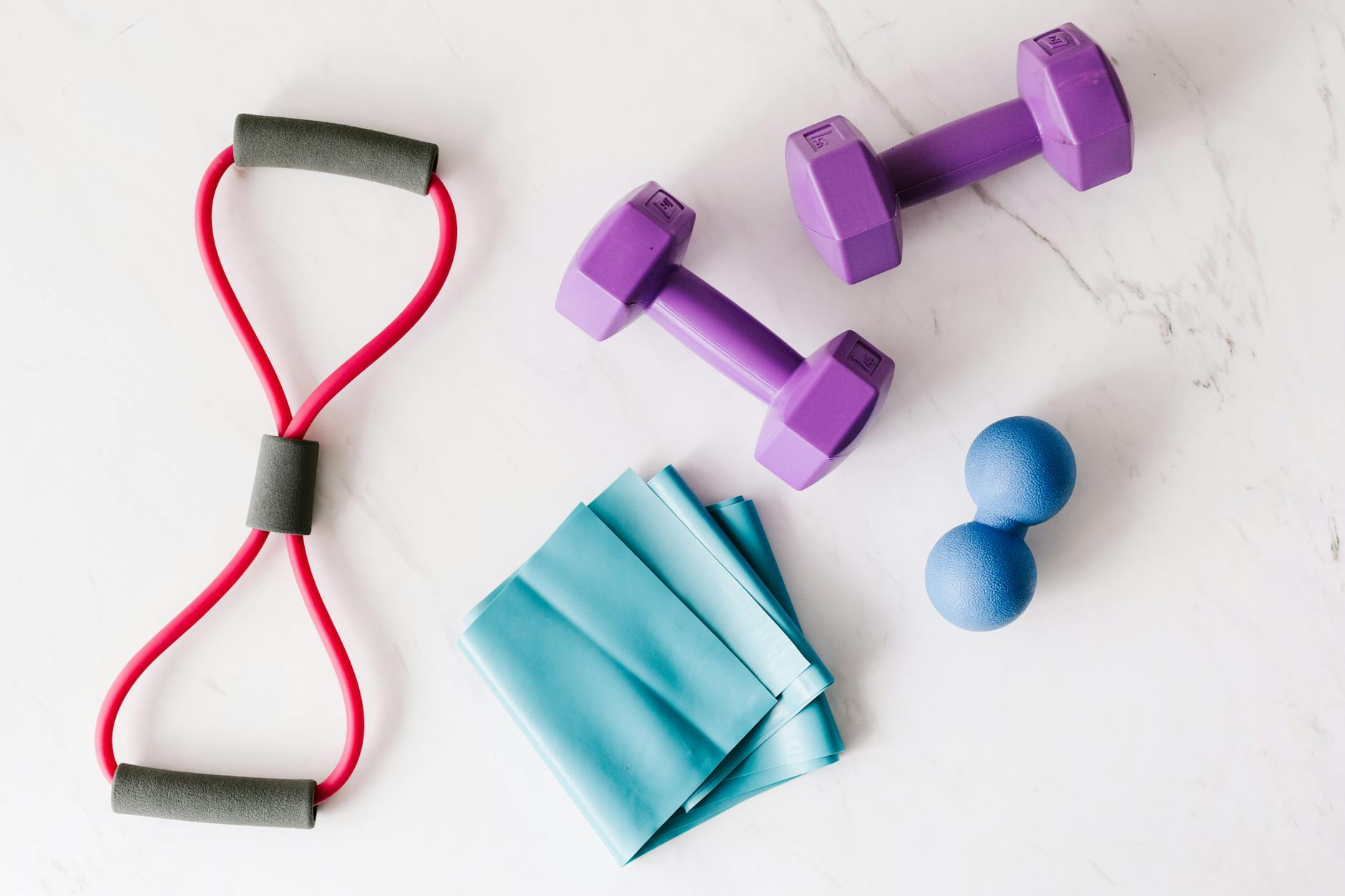
- Resistance bands set: ~$20
- Adjustable jump rope: ~$10
- Foldable exercise mat: ~$25
- Compact dumbbells: ~$25
- LED light strip: ~$10
- Storage solution (basket or wall hooks): ~$10
That puts you right around the $100 mark.
You can find all of these through common retailers like Amazon, Target, or Walmart. When you’re selecting products, look for neutral colors or cohesive tones—black, gray, or muted colors tend to look cleaner and more intentional in small spaces.
1. Start With a Defined Space (Even If It’s Small)
One of the biggest mistakes people make is not defining their workout area.
If your equipment is scattered or tucked away, it becomes invisible. And invisible habits don’t happen.
You don’t need a full room. A small corner—about the size of a yoga mat—is enough. What matters is that it’s clearly designated.
Position your mat in a consistent spot. Keep your equipment nearby and visible. If possible, place it somewhere you naturally pass during the day, like near your desk or bed.
This creates a subtle trigger. Every time you see the space, it reminds you to use it.
In small apartments, this might mean shifting a chair, rolling out a mat, or repurposing a corner. It doesn’t need to be permanent—it just needs to be intentional.
2. Choose Gear That Does More Than One Thing
With a limited budget, versatility matters.
Resistance bands are one of the best investments you can make. They allow for pushing, pulling, and lower-body movements without taking up space.
A simple set lets you cover:
- Squats and lunges
- Rows and presses
- Core work
Adjustable dumbbells (or even a single moderate-weight pair) add another layer. You don’t need a full rack—just enough resistance to challenge basic movements.
A jump rope gives you a quick cardio option that doesn’t require much space.
The goal here isn’t variety for its own sake. It’s having just enough tools to keep your workouts interesting without overwhelming your space.
3. Upgrade Your Lighting (This Matters More Than You Think)
Lighting is one of the most overlooked elements in a home gym.
If your space feels dim or flat, it’s harder to get energized. Bright, warm lighting can make a small area feel more inviting and active.
You don’t need anything expensive. A simple LED strip behind a desk, shelf, or along a wall can change the entire feel of the space.
Warm white or soft yellow tones tend to feel more comfortable, while cooler tones can feel more energetic. Choose based on your preference.
The point isn’t to create a showroom. It’s to make the space feel different from the rest of your home—like a place you go to move.
4. Keep It Visually Clean (Clutter Kills Motivation)
You’ve probably noticed this without realizing it: clutter makes everything feel harder.
If you have to move things, dig for equipment, or clear space before working out, you’re adding friction. And friction leads to skipped sessions.
Keep your setup simple. A small basket for bands, a hook for your jump rope, and a designated spot for your mat is enough.
Avoid overloading the space with unnecessary items. More gear doesn’t equal better workouts.
What you’re aiming for is clarity. When you look at your setup, it should feel easy to start.
5. Use Color and Texture to Make It Feel Intentional
This is where the “dopamine-friendly” part really comes into play.
Your brain responds to visual cues. Small touches—like color coordination or texture—can make your space feel more complete.
You don’t need to repaint walls or buy expensive decor. Even small adjustments help.
A neutral mat, matching equipment, or a simple wall print can make the area feel more cohesive.
Plants are another easy addition if you have the space. Even a small one can make the environment feel less sterile.
The idea is to create a space that feels like it belongs in your home, not something temporarily thrown together.
6. Make It Easy to Start (Reduce Friction to Zero)
The easier it is to begin, the more likely you are to follow through.
Keep your mat accessible. Don’t store it in a closet. Don’t fold it away unless you absolutely have to.
Leave your bands within reach. Hang them where you can see them.
If your setup requires more than a few seconds to get started, it’s too complicated.
This might sound minor, but it’s one of the biggest factors in consistency.
7. Add One Element That Feels “Rewarding”
This doesn’t have to be complicated.
It could be:
- A playlist you only use during workouts
- A specific light setting you turn on
- A small visual cue like a progress tracker
These elements create a sense of reward. Over time, your brain starts associating the space with a positive experience.
That’s what keeps you coming back.
8. Build a Simple Routine Around the Space
Even the best setup won’t matter if you don’t use it.
You don’t need a complex program. A short, repeatable routine is enough.
Focus on basic movements:
- Squats
- Push-ups
- Rows (with bands)
- Core work
Keep it simple and consistent.
The goal is to make showing up easy, not to maximize every session.
9. What to Avoid (This Saves You Money)
It’s easy to overspend on things you don’t need.
Skip:
- Large machines (they don’t fit small spaces)
- Trendy gadgets with limited use
- Excessive accessories
Focus on fundamentals. They’ll give you more value and last longer.
The Real Advantage of a Small, Well-Designed Setup
There’s something underrated about a small, intentional space.
It’s easier to maintain. Easier to use. Easier to stick with.
You don’t need a perfect home gym. You need one that works for your life.
When your setup looks good, feels good, and removes friction, you stop relying on motivation. You just show up.
And that’s where consistency actually comes from.
Leave a Reply