- The Core Problem: Structured Errors on Both Sides of the Equation
- Mistake #1: Trusting Your Fitness Tracker's Calorie Burn Numbers
- Mistake #2: Measuring Food With Cups and Spoons Instead of a Scale
- Mistake #3: Invisible Liquid Calories
- Mistake #4: Mislogging "Healthy" Fats
- Mistake #5: The Exercise-Intake Compensation Problem
- Putting It All Together: How to Build an Actual Deficit
- The Bigger Picture: When Fixing Tracking Isn't Enough
You’ve been logging every meal. You’re wearing the fitness tracker religiously. Your app says you’re in a 500-calorie daily deficit, which should be producing about a pound of fat loss per week. And yet the scale won’t move — or worse, it’s going up.
Before you cut more calories or add another workout, consider this: the deficit you think you’re in might not exist at all. Not because you’re cheating or forgetting to log — but because the tools you’re using to measure that deficit are quietly lying to you on both sides of the equation.
Your tracker is overestimating what you burn. Your logging method is underestimating what you eat. The gap between what you think is happening and what’s actually happening can easily add up to 500-800 calories per day — which is enough to completely erase a theoretically sound deficit before you’ve eaten a single meal.
Here’s exactly where the miscalculation is happening, and how to fix each one.
The Core Problem: Structured Errors on Both Sides of the Equation
Weight loss math looks simple — calories in versus calories out. The problem isn’t the math. It’s that the numbers plugged into the equation are wrong, often by significant margins, in ways that consistently favor overestimation of burn and underestimation of intake.
These aren’t random errors. They’re structural, systematic, and they push in the same direction every time — making your deficit look larger than it is. That means someone who is genuinely disciplined about tracking can be consistently confident they’re in a deficit while eating at or above maintenance. The confidence is the problem. It’s based on accurate-seeming data that isn’t actually accurate.
Here’s where each piece of the miscalculation comes from.
Mistake #1: Trusting Your Fitness Tracker’s Calorie Burn Numbers
This is the biggest and most consequential error most calorie-counters make, and the research on it is unambiguous.
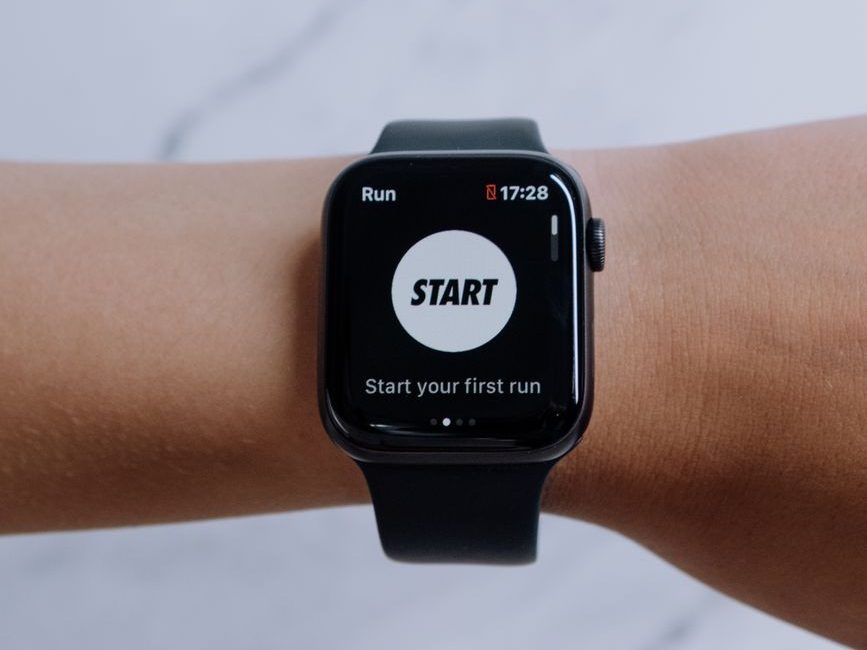
A landmark 2017 study from Stanford University published in the Journal of Personalized Medicine tested seven popular wrist-worn fitness devices on 60 participants. None of the seven devices measured energy expenditure accurately. The most accurate device had a median error rate of 27% for calorie estimation, and the least accurate had a 93% error rate. The Stanford researchers concluded that none of the devices provided estimates of energy expenditure within an acceptable range in any setting.
To put that in practical terms: your tracker says you burned 600 calories on that workout. The actual number might be 420. It might be 325. It might — if you happen to have the least accurate device on a bad data day — be closer to 300. And if you’re eating back exercise calories based on what your watch reported, you’ve just negated your entire deficit.
The fix:
- Stop eating back tracker-reported exercise calories entirely, or apply a 30-40% discount to whatever your device reports before using the number for any nutritional decision
- Treat your tracker as a motivational and consistency tool — steps, sleep, heart rate trends — rather than a precision calorie instrument
- Build your calorie targets from a manually calculated TDEE (Total Daily Energy Expenditure) estimate using a calculator that accounts for your height, weight, age, and activity level, then test it empirically over 3-4 weeks of consistent eating before adjusting
- If you want the most accurate possible picture of your energy burn, use a metabolic testing service that measures resting metabolic rate via indirect calorimetry — this gives you a real number to build from rather than an algorithm’s guess
A chest-strap heart rate monitor delivers meaningfully more accurate heart rate data than wrist-based optical sensors during exercise — and heart rate is the primary input for calorie estimation algorithms. More accurate heart rate data equals less distorted calorie estimates. The Polar H10 Heart Rate Monitor Chest Strap is widely regarded as the gold standard for consumer heart rate monitoring and gives your fitness tracker’s algorithm better inputs to work with, particularly during high-intensity or resistance training where wrist sensors lose accuracy most dramatically.
Mistake #2: Measuring Food With Cups and Spoons Instead of a Scale
If you’ve been measuring food with volumetric measures — tablespoons, cups, handfuls — instead of weighing it in grams on a food scale, you’re almost certainly underestimating your intake, and the gap is larger than most people expect.
The most commonly underestimated foods by volume measurement are exactly the foods most associated with “healthy eating”:
- Peanut butter or nut butter: A tablespoon measure from a jar typically delivers 1.5-2 tablespoons when scooped normally — adding 50-100 extra calories per serving that logging apps never see
- Olive oil and cooking oils: A “drizzle” or “splash” into a pan can be anywhere from one teaspoon to two tablespoons. The difference is 100 calories. Done three times a day, that’s 300 undocumented calories just from oil
- Pasta and rice (dry vs. cooked): Logging apps frequently list pasta and rice in cooked weight, but portions are often visually estimated from the finished bowl. The same volume of cooked rice from different cooking methods can vary by 30% in actual caloric content depending on water absorption
- Cheese: A serving is typically one ounce — a measurement that almost nobody actually measures, and that most people estimate as “a slice” or “a handful” that’s 1.5-2oz in practice
- Nuts and trail mix: Dense, high-calorie foods where a 10-gram overestimate per serving adds up to 60-80 undocumented calories — easy to miss when eating from a bag or bowl rather than a measured portion
Research consistently shows that people underestimate their caloric intake — one study found that subjects underreported food consumption by an average of 47% — which directly explains why many people in a theoretical calorie deficit are not losing weight. That’s not rounding errors. That’s close to double what’s being reported.
The fix:
- Weigh everything in grams using a kitchen food scale rather than measuring by volume, particularly for calorie-dense foods
- Log food as raw/dry weight when possible, since cooking method dramatically affects calorie density for foods like rice, pasta, meat, and vegetables
- Be especially precise with oils, nut butters, cheeses, and nuts — these are the foods where volumetric estimation goes furthest wrong per serving
A compact kitchen scale that measures in 1-gram increments makes this habit significantly more friction-free than using bulky measuring cups. The Etekcity Kitchen Food Scale sits flat on a counter, tares easily, reads in 1-gram increments, and is accurate enough to catch the difference between a tablespoon and a tablespoon and a half of peanut butter — the kind of precision that actually resolves a mystery deficit.
Mistake #3: Invisible Liquid Calories
Drinks are the single category most consistently absent from calorie tracking logs, and they can add 200-600 calories per day while leaving no psychological record of having “eaten” anything.
The usual suspects:
- Specialty coffee drinks: A standard oat milk latte from a major chain delivers 150-240 calories. Two per day, not logged because “it’s just coffee,” is 300-480 calories outside your tracked intake.
- Fruit juice and smoothies: Pressed juices, green smoothies, and fruit-based drinks concentrate the calories of whole fruit without the fiber that drives satiety — a 16oz green juice might deliver 200-280 calories that log as “healthy” and don’t feel like food
- Alcohol: A glass of wine is 120-180 calories. Two glasses with dinner, three nights a week, is 720-1,080 calories per week not counted anywhere
- Protein shakes and sports drinks: These are often logged correctly, but the add-ins — nut butter blended in, a banana, honey, coconut milk — frequently get omitted from the entry
- “Just a taste” while cooking: Multiple small tastes while preparing a meal — a bite of cheese, a few chips, a spoonful of sauce — can easily contribute 100-200 calories that never get logged because the meal entry is created from the final plated dish
The fix:
- Log every liquid that contains calories before consuming it, not after — the pre-logging habit makes you actually account for what’s in the drink before you decide to have it
- Use a water bottle that makes it easy to stick to water as your default beverage between logged meals, reducing the decision fatigue around whether to log each drink
- Track alcohol specifically using total servings in a weekly log rather than relying on memory for each individual glass
A quality insulated water bottle that makes staying consistently hydrated easy reduces the unconscious reach for caloric beverages throughout the day. The Hydro Flask 32oz Wide Mouth Water Bottle keeps water cold throughout the day and is large enough to meaningfully reduce how often you’re reaching for alternatives.
Mistake #4: Mislogging “Healthy” Fats
This mistake gets its own section because it’s the one most likely to affect people who eat consciously and healthfully — and it’s the one most likely to create a genuinely confusing calorie mystery.
Olive oil, avocado, nuts, seeds, and nut butters are nutritionally excellent foods with a documented role in satiety and metabolic health. They’re also extraordinarily calorie-dense — more so than almost any other commonly consumed food category. And because they’re healthy, people frequently underestimate how much they’re using, underlog the amounts, or add them as afterthoughts to entries that don’t account for them.
Consider a day of healthy eating:
- Breakfast: avocado toast with “half an avocado” (130 calories if it’s a small avocado, 200 if it’s medium, 240 if it’s large — and most logging apps default to a medium)
- Lunch: salad with “olive oil and lemon dressing” — 2 tablespoons of olive oil is 240 calories, and the amount poured on a salad is rarely measured
- Snack: “a handful of almonds” — a handful is typically 1.5-2oz, delivering 250-340 calories, while a logged “serving” in most apps is 1oz at 164 calories
- Dinner: salmon cooked “in a little olive oil” — another unmeasured tablespoon adds another 120 calories
That’s potentially 400-600 calories of healthy fat that was technically logged but dramatically undercounted due to portion estimation. Against a theoretical 500-calorie deficit, this single category resolves the mystery entirely.
The fix:
- Weigh avocados in grams with the pit removed rather than estimating by half
- Measure oil by tablespoon using a measuring spoon and log it — every time, for every cooking application
- Weigh nuts in grams rather than estimating by handful
- Log salad dressing by measuring it before adding — not by estimating after tossing
Mistake #5: The Exercise-Intake Compensation Problem
Even when tracking is technically correct, there’s a behavioral pattern that undermines deficits without showing up in a food log: the unconscious tendency to eat more on days when you exercise.
Studies examining why exercise often fails to produce expected weight loss point to people overestimating calories burned during exercise and underestimating calories consumed — and research shows this is compounded by the fact that exercise can genuinely increase appetite, particularly for higher-intensity exercise. The post-workout meal is larger. The evening snack feels earned. The weekend workout produces a psychological permission slip for a bigger dinner.
None of this shows up in the log as a tracking error because the intake is accurately recorded. The problem is that the intake has increased in response to exercise, while the exercise’s calorie burn has been significantly overestimated by the tracker. Both effects work in the same direction.
The fix:
- Track food intake independently of exercise — don’t build workout-day calorie allowances from tracker data
- Recognize that a hard workout is not a free pass for a larger meal, regardless of what your tracker reports
- Set a consistent daily calorie target that doesn’t fluctuate with training days, and instead adjust it based on weekly scale trend rather than day-to-day workout data
A dedicated food logging journal — separate from an app — forces deliberate, manual entry that reduces the unconscious omission of small additions that digital logging makes easy to skip. The Fitlosophy Fitbook Nutrition Journal combines food logging, hydration tracking, and weekly trend review in a format that creates more mindful engagement with intake than tapping entries into a phone app.
Putting It All Together: How to Build an Actual Deficit
Once you correct for tracker overestimation, volumetric measurement error, liquid calories, healthy fat underlogging, and compensation eating, the picture of your real energy balance looks very different from the one your app has been showing you.
The approach that actually works:
- Use a manually calculated TDEE estimate as your calorie target, ignoring tracker-reported exercise burn entirely
- Weigh food in grams for at least two to four weeks until portion sizes are deeply calibrated
- Log every caloric liquid immediately before consuming it
- Treat all oils, nut butters, avocados, nuts, and seeds as mandatory-measure foods rather than estimation-friendly additions
- Track weekly weight trends rather than daily weigh-ins — the scale fluctuates by 2-4 pounds daily based on water, sodium, and hormonal factors, and weekly averages reveal the actual trend without the noise
For body composition tracking that gives you information beyond what the scale shows — like whether what you’re losing is fat or muscle — a bioelectrical impedance analysis (BIA) smart scale offers data that a standard scale doesn’t. The Withings Body Comp Smart Scale tracks body fat percentage, muscle mass, visceral fat, and bone mass alongside weight, giving you a more complete picture of whether your nutritional adjustments are moving body composition in the right direction rather than just changing a single number.
The Bigger Picture: When Fixing Tracking Isn’t Enough
Correcting your calorie tracking resolves the mystery for most people who think they’re in a deficit but aren’t seeing results. But for some, the tracking is genuinely accurate and the scale still won’t cooperate — pointing to other physiological factors that make weight loss resistant in ways that have nothing to do with calories.
For a broader look at what else might be stalling your progress despite accurate tracking and consistent effort, read Weight Gain Despite Diet and Exercise: 7 Reasons and 7 Fixes. It covers hormonal, metabolic, and recovery-related factors that can prevent fat loss even when the energy math appears correct.
This content is intended for general informational and educational purposes only and does not constitute medical, nutritional, or dietary advice. It is not intended to diagnose, treat, cure, or heal any medical condition or disease. Persistent weight gain or inability to lose weight despite a documented caloric deficit may indicate an underlying medical condition and should be evaluated by a licensed healthcare professional. Always consult a physician, registered dietitian, or certified nutrition specialist before making significant changes to your diet or exercise program. This content does not replace professional medical or nutritional care.
Leave a Reply