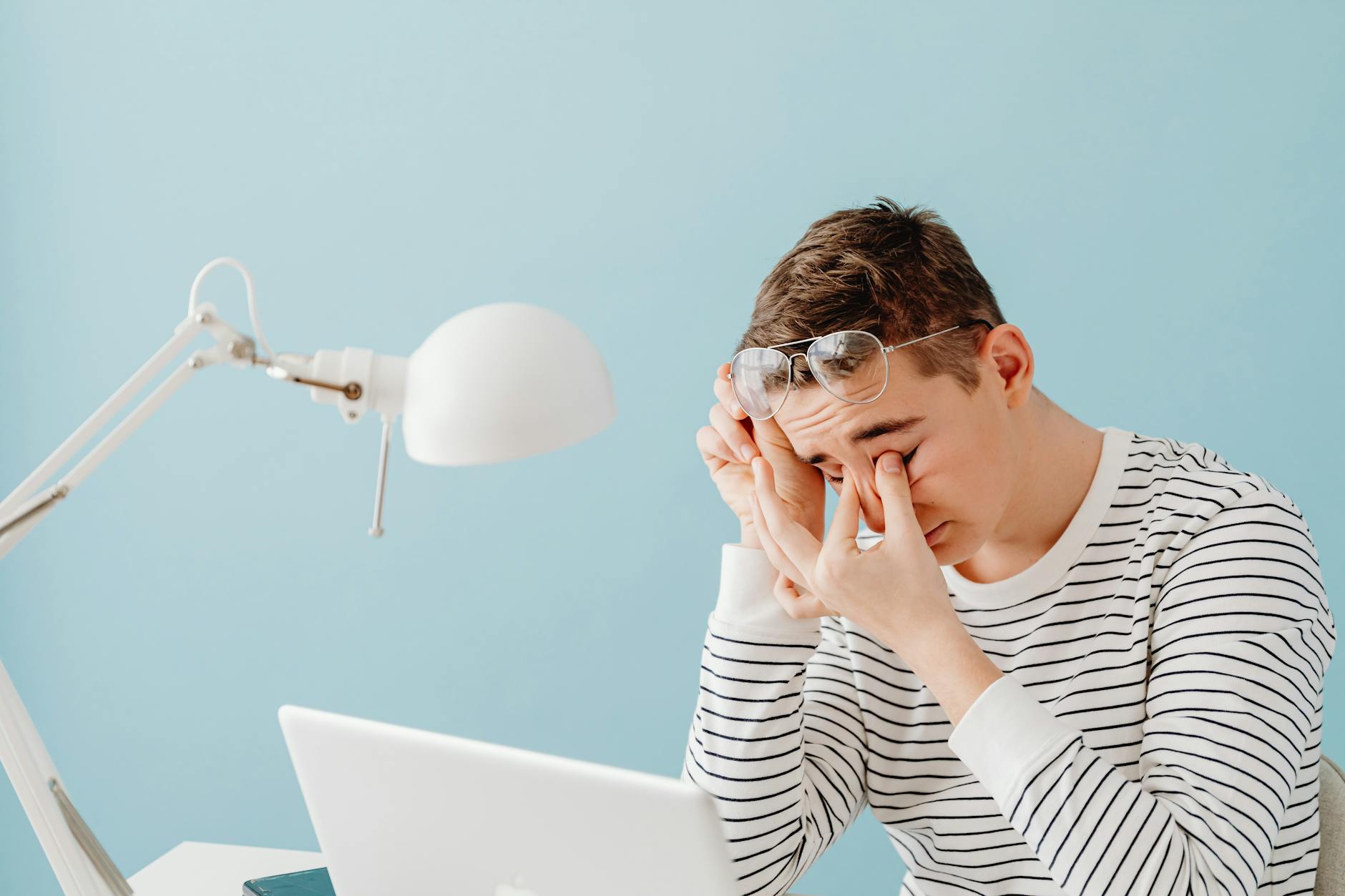
- Why Screen Time Is Making You Feel Tired
- The Hidden Reason: Your Eyes Are Overworking All Day
- The 20-20-20 Rule: The Simplest Fix for Screen Fatigue
- Screen Fatigue Exercise #1: The Distance Reset
- Screen Fatigue Exercise #2: Blink Reset
- Screen Fatigue Exercise #3: Eye Mobility Drill
- How Eye Fatigue Impacts Energy, Focus, and Productivity
- How to Prevent Screen Fatigue Long-Term
- Tools That Reduce Screen Fatigue
- Benefits of Fixing Screen Fatigue
- Key Takeaways
If you’ve ever hit that mid-afternoon slump where your eyes feel heavy, your focus disappears, and your productivity drops, you’re not alone. Most people assume it’s just mental fatigue or lack of sleep. But in many cases, the real culprit is much simpler—and often overlooked. It’s eye screen fatigue.
With most of us spending 8 or more hours a day staring at screens, digital eye strain has become one of the most common causes of fatigue, headaches, and lack of focus. According to Ohio State Health, prolonged screen use is strongly linked to symptoms like eye discomfort, blurred vision, and reduced concentration (health.osu.edu).
The good news is that you don’t need to overhaul your entire routine to fix it. Small changes—like following the 20-20-20 rule and doing a few simple eye exercises—can make a noticeable difference in how you feel and perform throughout the day.
Why Screen Time Is Making You Feel Tired
Let’s start with what’s actually happening.
When you look at a screen for long periods, your eyes are locked into a constant state of focus. Unlike looking at objects in the real world, which naturally vary in distance, screens keep your eyes fixed at one range for hours at a time. This puts continuous strain on the muscles responsible for focusing.
At the same time, your blink rate drops significantly. Normally, you blink enough to keep your eyes moist and comfortable. But when you’re focused on a screen, blinking slows down, which leads to dryness and irritation.
This combination—constant focus and reduced blinking—creates what’s known as digital eye strain. Over time, it can lead to symptoms like tired eyes, headaches, blurry vision, and even neck and shoulder tension.
The important thing to understand is that this isn’t just an eye problem. When your eyes are fatigued, your brain has to work harder to process visual information. That extra effort contributes directly to mental fatigue, which is why you feel drained even if you haven’t done anything physically demanding.
The Hidden Reason: Your Eyes Are Overworking All Day
Most people don’t realize just how hard their eyes are working during a typical day.
When you focus on something up close—like a phone or computer screen—tiny muscles inside your eyes contract to keep the image sharp. This is called accommodation. It’s a normal process, but it’s not meant to be held for hours without a break.
The problem is that modern work environments demand exactly that. You might spend your entire morning switching between emails, documents, and tabs, all at the same distance from your eyes. There’s no variation, no reset, and no opportunity for those muscles to relax.
On top of that, reduced blinking makes things worse. Studies have shown that people blink far less when using screens, which contributes to dry eye symptoms and discomfort (milaneyecenter.com).
Over time, this creates a feedback loop. Your eyes become tired, your vision becomes less comfortable, and your brain has to compensate. That’s when you start to feel mentally drained, even if your workload hasn’t changed.
The takeaway is simple: eye fatigue is physical fatigue. And if you don’t address it, it will continue to impact your energy and focus.
The 20-20-20 Rule: The Simplest Fix for Screen Fatigue
If there’s one habit that can make an immediate difference, it’s the 20-20-20 rule.
The concept is straightforward. Every 20 minutes, you take a short break and look at something at least 20 feet away for 20 seconds. That’s it.
It may sound too simple to matter, but it works because it directly addresses the root cause of eye strain. When you shift your gaze to something far away, the muscles in your eyes relax. This gives them a chance to recover from the constant near-focus they’ve been maintaining.
Eye care professionals frequently recommend this method as a practical way to reduce digital eye strain and improve comfort during prolonged screen use (health.osu.edu).
The key is consistency. Doing it once or twice won’t have much impact, but repeating it throughout the day can significantly reduce fatigue.
What makes the 20-20-20 rule so effective is that it’s easy to implement. You don’t need special equipment or extra time—just a reminder to pause and look away.
Screen Fatigue Exercise #1: The Distance Reset
The distance reset is essentially the 20-20-20 rule in action, but with a bit more intention.
Instead of just glancing away from your screen, you actively focus on something in the distance. This could be a building outside your window, a hallway, or any object that’s far enough away to require your eyes to fully relax.
Hold your gaze there for about 20 to 30 seconds. During this time, try to let your eyes soften rather than strain to see details.
This simple shift does two important things. First, it relaxes the muscles responsible for near focus. Second, it breaks the mental pattern of staring at a screen, which can help you reset your attention.
Many people notice that even a single distance reset can make their eyes feel less strained. When done consistently, it becomes one of the easiest ways to prevent fatigue from building up in the first place.
Screen Fatigue Exercise #2: Blink Reset
Blinking is something you do automatically, but during screen use, it often becomes irregular and incomplete.
A blink reset is a simple way to restore that natural rhythm.
Start by gently closing your eyes for a couple of seconds. Then open them and perform a series of slow, deliberate blinks. Focus on fully closing your eyelids each time, rather than doing quick, shallow blinks.
This helps redistribute the tear film across your eyes, which keeps them lubricated and comfortable. It also reduces the dryness and irritation that often come with prolonged screen use.
Reduced blinking is one of the primary causes of digital eye fatigue, which is why this exercise can be surprisingly effective (milaneyecenter.com).
You can do a blink reset anytime your eyes feel dry or tired. It only takes a few seconds, but it can make a noticeable difference in how your eyes feel.
Screen Fatigue Exercise #3: Eye Mobility Drill
Just like the rest of your body, your eyes benefit from movement.
When you spend hours looking at a screen, your eyes are essentially stuck in one position. Over time, this can lead to stiffness and fatigue in the muscles that control eye movement.
An eye mobility drill helps counteract that.
Start by slowly moving your eyes up and down, then side to side. After that, trace a gentle figure-eight pattern with your gaze. The goal isn’t speed—it’s smooth, controlled movement.
This exercise helps relieve tension and improves the flexibility of your eye muscles. It also provides a mental break, which can help you feel more refreshed when you return to your work.
While it may seem simple, adding even a minute of eye movement to your routine can help reduce the strain caused by static screen use.
How Eye Fatigue Impacts Energy, Focus, and Productivity
One of the biggest misconceptions about fatigue is that it’s always mental or physical in the traditional sense. In reality, visual fatigue plays a major role.
When your eyes are strained, your brain has to work harder to interpret what you’re seeing. This increases cognitive load, which makes it harder to focus and process information efficiently.
That’s why tasks that should feel easy start to feel difficult in the afternoon. It’s not necessarily that you’re less capable—it’s that your visual system is under strain.
Digital eye strain has been linked to headaches, difficulty concentrating, and reduced productivity (health.osu.edu).
The connection is clear. When you reduce eye strain, you also reduce mental fatigue. And when your mind feels clearer, your productivity naturally improves.
How to Prevent Screen Fatigue Long-Term
While exercises and quick fixes are helpful, long-term prevention comes down to building better habits.
Start by being more intentional about taking breaks. The 20-20-20 rule is a great foundation, but you can also step away from your screen entirely for a few minutes when possible. Even short breaks can make a difference. We recommend these 5 simple office stretches you can do during your breaks.
Your environment also matters. Adjusting your screen height so it sits slightly below eye level can reduce strain, as can improving lighting to minimize glare and contrast issues.
Another simple habit is to become more aware of your blinking. It may sound small, but maintaining a natural blink rate can significantly reduce dryness and discomfort.
These changes don’t require much effort, but they add up over time. The goal isn’t to eliminate screen use—it’s to make it more sustainable.
Tools That Reduce Screen Fatigue
While habits are important, the right tools can make a big difference—especially if you tend to forget to take breaks.
Blue light filtering glasses are one of the most popular options. They can help reduce glare and make screen use more comfortable, particularly in low-light environments. While they’re not a cure-all, many people find that they reduce eye strain during long work sessions.

ZM Blue Light Blocking & Light Sensitivity Glasses
4.4 Stars (3,400 Reviews)
You can also improve your setup with better lighting or a monitor riser that positions your screen at a more comfortable angle. These small adjustments can reduce strain without requiring constant effort.
Benefits of Fixing Screen Fatigue
When you address screen fatigue, the benefits go beyond just your eyes.
Physically, you’ll likely notice less dryness, fewer headaches, and more comfortable vision throughout the day. These improvements alone can make a big difference in how you feel.
Mentally, the impact can be even greater. Reduced eye strain leads to better focus, improved energy levels, and a greater ability to stay productive for longer periods.
Studies have shown that regular breaks and better screen habits can improve overall comfort and reduce symptoms of fatigue (educba.com).
In other words, small changes to how you use your eyes can have a ripple effect on your entire day.
Key Takeaways
If you’ve been struggling with afternoon fatigue, there’s a good chance your eyes are playing a bigger role than you think.
Long hours of screen use put constant strain on your visual system, which can lead to both physical and mental exhaustion. But the solution doesn’t require drastic changes.
By using the 20-20-20 rule and incorporating a few simple eye exercises, you can reduce strain, improve focus, and feel more energized throughout the day.
Start small. Take a 20-second break, look away from your screen, and give your eyes a chance to reset.
Because sometimes, the simplest fixes are the ones that make the biggest difference.
Leave a Reply