- What "80% Full" Actually Means (And Why It Feels Counterintuitive)
- Why It Works for Weight Loss Without Trying
- The 7 Practical Steps to Actually Practice Hara Hachi Bu
- Step 1: Eat More Slowly Than You Think You Need To
- Step 2: Use Smaller Plates and Serve Smaller Portions to Start
- Step 3: Remove Distractions from the Meal
- Step 4: Learn to Identify Your Personal 80% Signal
- Step 5: Start the Meal with Water and High-Volume, Low-Calorie Foods
- Step 6: Say It Out Loud (Or At Least Think It)
- Step 7: Wait Before Deciding on Seconds
- Tools That Help Build the Habit
- The Honest Limitations
- The Bigger Blue Zone Picture
- The Bottom Line
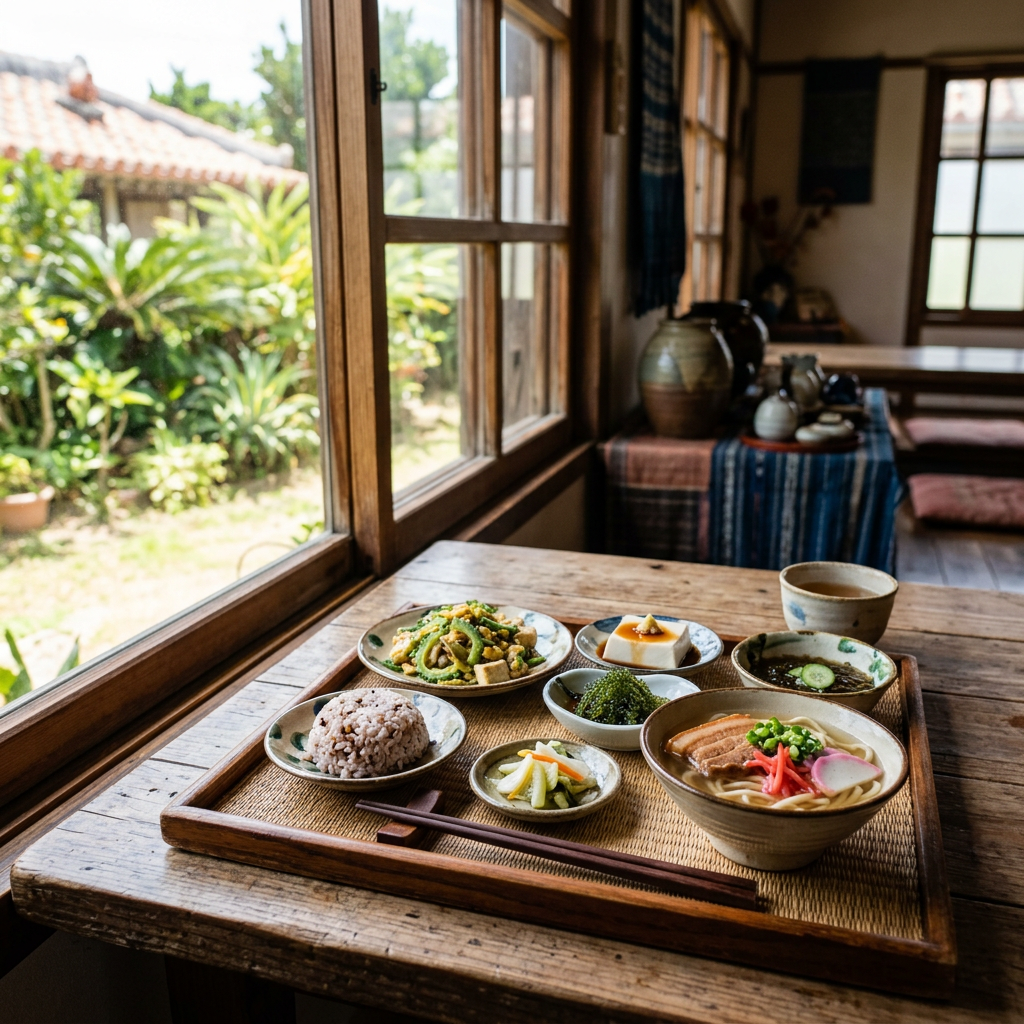
Somewhere in Okinawa, Japan, an elder sits down to dinner and quietly says two words before picking up chopsticks: hara hachi bu.
It’s a Confucian-inspired reminder, centuries old and still embedded in daily life across the island, to stop eating when you’re about 80% full. Not starving. Not stuffed. Just satisfied enough — and then done.
This doesn’t sound revolutionary. But Okinawa has one of the highest concentrations of centenarians in the world, one of the lowest rates of obesity and chronic disease, and their residents regularly live into their late 80s and 90s without formal diets, calorie-tracking apps, or structured exercise programs. The people practicing hara hachi bu aren’t doing it to lose weight. They’re doing it because their culture taught them to. The weight piece is just a byproduct.
Here’s how it actually works — biologically — and more importantly, how to practice it if you’ve spent years ignoring the signals your body was already sending you.

What “80% Full” Actually Means (And Why It Feels Counterintuitive)
Let’s address the obvious question upfront: how do you know when you’re 80% full?
The honest answer is that most modern eaters have genuinely lost touch with this signal. Portions have been supersized, screens have replaced conversation at the dinner table, and eating fast has become so normalized that the sensation of fullness is something most people experience retrospectively — they realize they’ve eaten too much only after they’re already uncomfortable.
Hara hachi bu asks you to find the signal earlier. Not after fullness arrives, but before it does. And the reason that’s physiologically tricky is simple: it takes roughly 20 minutes from the start of a meal for satiety signals to fully register in your brain.
That lag isn’t a character flaw. It’s biology. Feelings of hunger and fullness are controlled by hormones — particularly ghrelin (appetite-stimulating), leptin (appetite-suppressing), and post-meal hormones like PYY, GLP-1, and cholecystokinin — which are released sequentially as food moves through the digestive system and signal through the vagus nerve to the brain. This is a cascade, not a switch. The stomach stretches, hormones release, the vagus nerve carries the message — and all of that takes time.
In other words, if you eat at the pace most people do — a full plate in 10 minutes — you’ve consumed your entire meal before your brain has even begun to register that food arrived. The satiety signal shows up late, to an already-finished dinner. 80% full was never a checkpoint you had the chance to hit.
Hara hachi bu works by slowing the meal down enough that the body’s communication system can actually catch up.
Why It Works for Weight Loss Without Trying
The caloric math is understated and worth stating clearly. Okinawans following hara hachi bu consumed approximately 1,800 to 1,900 calories daily, significantly below the Western average of over 3,500 calories, while maintaining excellent nutritional status and remarkable health outcomes.
That’s not a small difference. That’s a 1,600-calorie daily gap — sustained not through restriction but through habit. Traditional Okinawans consumed approximately 10-20% fewer calories than the Japanese national average, consistent with hara hachi bu practice. This population has historically exhibited remarkably low mortality rates and high centenarian density.
500 fewer calories per day, without a single food being eliminated, without counting a macro, without a meal plan. Just stopping earlier.
A landmark 2018 study published in Cell Metabolism showed that even moderate caloric reduction — without malnutrition — slowed biological aging processes and reduced age-related disease risk factors in humans. The NIH’s CALERIE study has been generating similar findings: modest calorie restriction influences multiple biological pathways that support healthier aging. The mechanism isn’t starvation. It’s simply not exceeding what the body actually needs at each meal.
The 7 Practical Steps to Actually Practice Hara Hachi Bu
This is where most articles lose people. They explain the philosophy and leave you staring at your plate unsure what to do. Here’s the tactical breakdown.
Step 1: Eat More Slowly Than You Think You Need To
The single most effective intervention for practicing hara hachi bu is pace. If the satiety signal takes 20 minutes to arrive, you need to eat slowly enough that you’re still at the table when it does.
The target isn’t a specific minute-per-bite count. The practical goal is a meal duration of at least 20 minutes. If your current average is 7 minutes, 20 minutes will feel strange at first. That’s the point.
- Put utensils down between bites
- Chew each bite thoroughly — aim for 15-20 chews before swallowing
- Take a sip of water between bites
- Breathe between bites — it sounds obvious, but fast eaters frequently hold their breath while chewing
A small sand timer or a kitchen timer set to 20 minutes before you start eating provides a tactile reminder that the meal isn’t done until the signal has had time to arrive.
Step 2: Use Smaller Plates and Serve Smaller Portions to Start
The problem with eating to 80% full from a fully-loaded plate is that you’re working backward from too large a starting point. Blue Zone populations typically serve smaller portions in the first place — partly cultural, partly because their staple foods (beans, vegetables, whole grains) are more satiating per calorie.
Reducing your plate size and serving a slightly smaller initial portion creates an environment where the 80% stopping point lands in a more natural place. You can always have more if the meal finishes and you genuinely haven’t had enough. [Note: The practice of having seconds only after waiting 10-15 minutes is a useful hara hachi bu application — most people find the desire for more has passed by the time the wait is over.]
Step 3: Remove Distractions from the Meal
This is the factor that quietly doubles the difficulty of hara hachi bu for most modern eaters: distracted eating disconnects you from your body’s signals entirely. When you’re watching something, scrolling, or working through lunch, you’re not monitoring the internal signals that tell you where on the fullness scale you are.
Hara hachi bu requires that you’re present enough to notice the signal when it arrives. That means:
- Phone face-down or in another room during meals
- TV off, or at minimum, not the focal point
- If eating with others, conversation instead of content
- Sitting at a table, not a desk
Step 4: Learn to Identify Your Personal 80% Signal
Because everyone’s baseline is different, there’s no universal physical description of 80% full. Part of the practice is developing personal familiarity with what that point feels like for you. Common descriptions include:
- A subtle decrease in the pleasure of eating — the first few bites are the most satisfying; 80% full is often the point where the eating starts to feel less enjoyable
- A slight shift in breathing — some people notice their breath changes subtly when the stomach is becoming comfortably full
- The absence of hunger, rather than the presence of fullness — 80% often feels like “no longer hungry” rather than “full”
- Ease of movement — if you stand up and feel light and easy to move, you’re likely at or under 80%; if standing feels effortful, you’ve probably passed it
For the first two weeks of practice, pause at the halfway point of every meal for 30 seconds and check in. Ask yourself: where am I on the scale? Not in a neurotic way — just a quick body scan. This builds the habit of internal monitoring that hara hachi bu requires.
Step 5: Start the Meal with Water and High-Volume, Low-Calorie Foods
Stomach distension — the physical stretching of the stomach wall — is actually a dominant early satiety signal sent through the vagus nerve. This means you can use the volume of food, not just the calories, to start the fullness cascade earlier.
Practical applications:
- Drink 8-12oz of water before sitting down to eat — it begins stomach distension before the first bite
- Start every meal with a salad, broth-based soup, or raw vegetables — high-volume foods that take up stomach space, slow the meal, and begin the satiety signal before the more calorie-dense foods arrive
- The soup-first approach is actually common in Okinawan meals — not coincidentally, given what we now know about stomach volume and satiety timing
Step 6: Say It Out Loud (Or At Least Think It)
The original practice isn’t just a concept — it’s a verbal cue spoken before the meal. There’s behavioral science supporting this: implementation intentions, which are specific verbal or mental plans for how you will behave in a given situation, significantly increase follow-through on behavioral goals compared to simply knowing what you want to do.
Saying “hara hachi bu” — or even just “I’m going to stop at 80%” — before you start eating primes the intention. You’ve made a commitment before hunger is at its peak. This matters because decision-making quality declines when you’re hungry; the pre-meal reminder sets the intention while you still have full cognitive access to it.
Step 7: Wait Before Deciding on Seconds
This is the most practical single-behavior change for people who consistently overeat: institute a mandatory pause before taking seconds.
If you finish what’s on your plate and feel like you want more, wait 10-15 minutes. That’s the minimum time needed for the satiety signal to close the loop. In most cases, the desire for more food passes naturally within that window. If you stop eating when you think you’re 80% full, you’re likely actually 100% full — you just don’t know it yet, because the signal takes 15-20 minutes to register.
Tools That Help Build the Habit
Three practical tools make hara hachi bu significantly easier to implement consistently:
A mindful eating journal. The Five Minute Journal isn’t food-specific, but its morning and evening reflection prompts build the self-awareness practice that mindful eating requires. Tracking hunger level before meals and satisfaction level after them, for even two weeks, accelerates the process of learning your personal 80% signal.
Smaller serveware. Research from Cornell’s Food and Brand Lab consistently shows that plate size directly influences portion size — people serve themselves and eat more from larger plates without noticing. A dedicated smaller plate and bowl — Japanese-style ceramic sets are naturally portion-appropriate — can shift the environmental default in your favor before you’ve even thought about it. The Hasense Porcelain Appetizer Plates (Set of 6) are an aesthetically aligned and practical option for anyone building this into their daily meals.
A smart eating timer. The Ozeri Pronto Kitchen Scale isn’t for weighing food in the dieting sense — it’s for tracking portion sizes as you learn to recalibrate what a single serving actually looks like, before transitioning fully to hunger-based eating. Many people trying hara hachi bu find it helpful to spend 2-3 weeks understanding their baseline portion sizes before shifting entirely to intuition.
The Honest Limitations
Hara hachi bu is not appropriate for everyone in the same way. People with a history of eating disorders should approach any practice involving reduced eating volume with the guidance of a healthcare provider. People who are underweight, pregnant, or managing specific medical conditions should consult a physician before intentionally eating less at meals, even modestly.
The practice also requires environmental support to work — it’s harder to stop at 80% in a culture that celebrates finishing your plate, at a restaurant with bottomless servings, or while eating alone in front of a screen. These aren’t reasons not to try; they’re the specific conditions to work on intentionally.
The Bigger Blue Zone Picture
Hara hachi bu doesn’t exist in isolation. In Okinawa — and across all five Blue Zones — it’s part of a broader food environment that includes predominantly plant-based eating, a daily emphasis on beans and legumes, meals eaten in social settings with people they care about, and a natural relationship with food that’s been cultivated over generations rather than imposed through a diet protocol.
If you want to understand the full dietary framework that makes hara hachi bu most effective, including what Okinawan and other Blue Zone populations actually eat day to day, read The Blue Zone Diet: What the World’s Longest-Lived People Actually Eat. The 80% full rule is the when and how much — but the what matters just as much, and the two work best together.
The Bottom Line
The 20-minute satiety delay is real, it’s biological, and it’s the exact gap that modern eating habits exploit without most people realizing it. Hara hachi bu is, at its core, a practice of closing that gap — slowing down enough that the body’s natural communication system can actually do its job.
No macro counting. No elimination. No weekly weigh-ins. Just a quiet reminder before each meal, a slower pace, and the discipline to stop before you feel full — knowing that fullness is already on its way.
This content is intended for general informational and educational purposes only and does not constitute medical, nutritional, or dietary advice. It is not intended to diagnose, treat, cure, or heal any medical condition or disease. Practices involving changes to eating behavior, including caloric reduction, are not appropriate for everyone. Always consult a licensed healthcare professional — such as a physician or registered dietitian — before making significant changes to your eating habits, especially if you have a history of eating disorders, are underweight, pregnant, or managing any medical condition. This content does not replace professional medical or nutritional care.
Leave a Reply