
- How Muscle Growth Actually Works
- How Much Protein Do You Actually Need?
- The Best Protein Foods for Muscle Growth
- Carbs and Fats: The Supporting Cast
- Micronutrients Worth Paying Attention To
- Building a Simple Muscle-Building Meal Plan
- Do You Need Supplements?
- Common Mistakes Beginners Make
- How Long Does It Actually Take?
- The Bottom Line
If you’ve ever asked what the best food is for building muscle, you’re already thinking the right way. Muscle growth doesn’t just happen in the gym. It happens in the kitchen too.
The foods you eat determine how well your muscles recover, how strong you get, and how fast you see progress. This guide breaks down exactly which foods help, how much you actually need, and how to put it all together into meals you can actually stick with.
Magnesium is one nutrient that’s easy to overlook but plays a real role in muscle function and recovery. This guide on how much magnesium glycinate to take for muscle recovery breaks down dosing if you want to look into it further. Let’s start with how muscle growth actually works.
How Muscle Growth Actually Works
Before looking at specific foods, it helps to understand what’s happening inside your body. When you do resistance training, like lifting weights, you create tiny tears in your muscle fibers.
Your body repairs these tears afterward, and in doing so, makes your muscles bigger and stronger. This process is called muscle protein synthesis, and it depends heavily on the raw materials you give your body through food: protein, carbohydrates, healthy fats, and key vitamins and minerals.
Simply put, if you want to build muscle, you need enough total calories and quality nutrients to actually support that growth. Training provides the signal; food provides the materials.
Neither piece works well without the other. You can train perfectly and still see disappointing results if your nutrition isn’t supporting the repair process, which is exactly why this guide focuses so heavily on food rather than just workouts.
How Much Protein Do You Actually Need?
Protein is the single most important nutrient for building muscle, since it provides the amino acids that become new muscle tissue. Research consistently shows that adequate protein intake significantly improves muscle growth and strength gains from resistance training. ¹
For most beginners, a good target is 0.7 to 1 gram of protein per pound of body weight daily. A 150-pound person would aim for roughly 105 to 150 grams a day, while a 180-pound person would aim for about 125 to 180 grams. This might sound like a lot at first, but it becomes manageable once you build meals around protein-rich foods.
One amino acid in particular, leucine, plays an outsized role here. Research shows leucine acts as a trigger for muscle protein synthesis, which is part of why animal proteins like whey, chicken, and eggs are so effective for muscle building specifically. ²
The Best Protein Foods for Muscle Growth
A variety of protein sources works better than relying on just one or two foods.
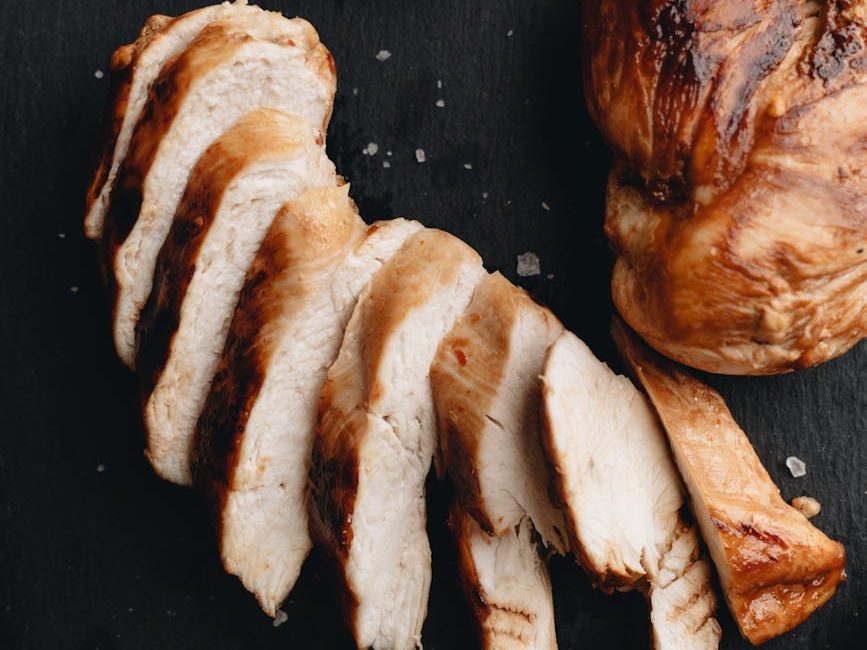
Chicken breast delivers about 26 grams of protein per 3-ounce serving with very little fat. Eggs provide complete protein along with nutrients like choline that support recovery. Fish like salmon and tuna combine protein with omega-3 fats that further support muscle recovery. Lean beef adds iron and a small amount of natural creatine alongside its protein.
Greek yogurt and cottage cheese are excellent dairy options, with cottage cheese digesting slowly enough to support repair overnight. Tofu and tempeh provide complete plant-based protein for vegetarians and vegans, and a protein powder can help fill any remaining gaps when whole food alone isn’t quite enough.
The specific food matters less than hitting your total protein target consistently. If you enjoy eggs and chicken every day, stick with them. Variety is nice for your palate and micro-nutrient intake, but it isn’t required for muscle growth itself.
Carbs and Fats: The Supporting Cast
Protein gets most of the attention, but carbohydrates and fats matter too, and skipping either one can slow your progress.
Carbohydrates are your muscles’ preferred fuel source. Without enough carbs, your workouts suffer and recovery slows down. Good options include oats, brown rice, quinoa, sweet potatoes, and fruit, ideally eaten around your workouts to fuel and refuel your training.
Healthy fats support hormone production, including hormones directly involved in muscle growth. Avocados, nuts, seeds, olive oil, and fatty fish are all solid sources. Aim for fats to make up roughly 20 to 30% of your total daily calories, since they’re calorie-dense and a little goes a long way.
Micronutrients Worth Paying Attention To
Vitamins and minerals don’t build muscle directly, but they support the systems that make muscle growth possible.
Vitamin D supports bone and muscle function and comes from sunlight or fatty fish. Magnesium helps with muscle contraction and recovery, found in spinach, almonds, and black beans. Zinc supports testosterone production and immune health, found in red meat and pumpkin seeds. Iron helps transport oxygen to your muscles, and calcium supports both muscle contractions and bone strength.
A varied diet full of colorful whole foods usually covers these nutrients without much extra effort. If you eat mostly processed or repetitive meals, though, it’s worth taking a closer look at whether you’re actually getting enough of these supporting nutrients, since deficiencies can quietly slow down recovery even when your protein and calories look fine on paper.
Building a Simple Muscle-Building Meal Plan
Knowing which foods help is only step one. Putting them together consistently is where real progress happens.
Eat in a calorie surplus. Find your maintenance calories, the amount that keeps your weight stable, then add roughly 250 to 500 calories a day to support growth. Spread protein throughout the day rather than eating it all in one meal, aiming for about 20 to 40 grams every three to four hours to keep your body consistently supplied.
Prioritize your post-workout meal. A combination of fast-digesting protein, like whey or eggs, and carbohydrates, like rice or fruit, helps kickstart muscle repair and refill your energy stores. Stay hydrated throughout the day too, since even mild dehydration can reduce your strength and slow recovery.
A simple sample day might include eggs and oatmeal for breakfast, grilled chicken with rice and vegetables for lunch, a protein shake with fruit after your workout, and salmon with quinoa for dinner. A small serving of cottage cheese before bed rounds things out with slow-digesting protein overnight.
Do You Need Supplements?
Supplements can help, but they aren’t required to build muscle. Whole foods should always come first, with supplements filling in any remaining gaps.
Protein powder is a convenient way to hit your daily protein target. Creatine monohydrate is one of the most well-researched supplements available, and a major research position statement found it both highly effective and safe for long-term use. ³ Most people benefit from 3 to 5 grams daily. Omega-3 fish oil, vitamin D, and magnesium may offer additional support, particularly if you’re not getting enough through food alone. ⁴
Common Mistakes Beginners Make
A few habits quietly get in the way of real progress, even for people training hard.
Not eating enough is one of the most common issues, since many beginners underestimate how many calories muscle growth actually requires. Skipping protein consistently stalls repair no matter how well you’re training. Fearing carbsremoves fuel your body genuinely needs for performance and recovery, and inconsistent eating habits mean missed opportunities for your body to rebuild.
How Long Does It Actually Take?
Muscle building takes real time, especially for beginners. On average, gaining about 1 to 2 pounds of lean muscle per month is a realistic pace with consistent training and nutrition.
Many people notice increased strength within 2 to 4 weeks, visible changes within 8 to 12 weeks, and a more noticeable transformation over 4 to 6 months. The biggest factor in all of this is simple consistency: showing up for your workouts and eating well most days, not just occasionally.
The Bottom Line
There’s no single magic food that builds muscle on its own. Real progress comes from combining enough total calories, quality protein spread throughout your day, adequate carbs and fats, and a handful of supportive micronutrients.
Eat consistently, prioritize protein at every meal, and stay patient with the process. The foods on your plate every day are doing just as much work as the reps you complete at the gym.
References
¹ Morton RW, Murphy KT, McKellar SR, et al. (2018). A systematic review, meta-analysis and meta-regression of the effect of protein supplementation on resistance training-induced gains in muscle mass and strength in healthy adults. British Journal of Sports Medicine. https://pubmed.ncbi.nlm.nih.gov/28698222/
² Hamarsland H, Nordengen AL, Aas SN, et al. (2017). Native whey protein with high levels of leucine results in similar post-exercise muscular anabolic responses as regular whey protein: a randomized controlled trial. Journal of the International Society of Sports Nutrition. https://pubmed.ncbi.nlm.nih.gov/29200982/
³ Kreider RB, Kalman DS, Antonio J, et al. (2017). International Society of Sports Nutrition position stand: safety and efficacy of creatine supplementation in exercise, sport, and medicine. Journal of the International Society of Sports Nutrition. https://pubmed.ncbi.nlm.nih.gov/28615996/
⁴ Khan SU, Lone AN, Khan MS, et al. (2021). Effect of omega-3 fatty acids on cardiovascular outcomes: a systematic review and meta-analysis. EClinicalMedicine. https://pmc.ncbi.nlm.nih.gov/articles/PMC8413259/
⁵ Leidy HJ, Carnell NS, Mattes RD, Campbell WW. (2007). Higher protein intake preserves lean mass and satiety with weight loss in pre-obese and obese women. Obesity (Silver Spring). https://pubmed.ncbi.nlm.nih.gov/17299116/
Health Disclaimer: This article is for general information only and is not medical advice. Talk to a doctor or registered dietitian before making significant changes to your diet or starting a new supplement, especially if you have a health condition, kidney or liver issues, or take other medications. Individual nutrition needs vary, and this article does not replace personalized advice from a qualified healthcare provider.
Leave a Reply