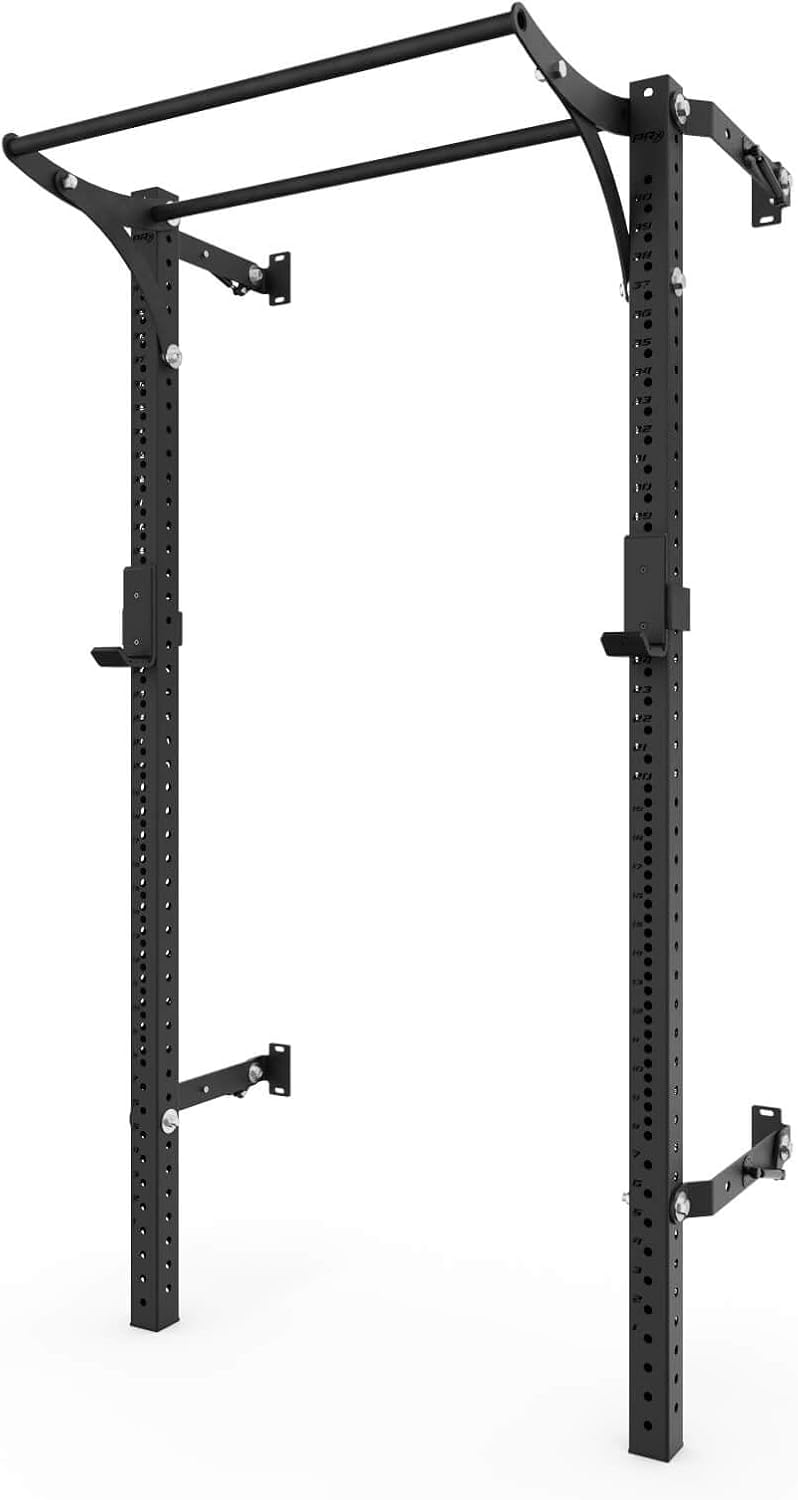
Your garage is a sacred space—part workshop, part storage unit, part “where did we put that thing from 2003,” and now, apparently, it needs to become a gym too. But here’s the problem: traditional power racks are basically permanent residents that consume 12 to 25 square feet of precious real estate. Want to park your car inside during winter? Too bad, the squat rack is living there now. Need to set up folding tables for your kid’s birthday party? Better hope everyone likes squeezing between barbells and uprights.
Enter the folding squat rack—the engineering marvel that lets you have your gains and park your car too. These wall-mounted space savers fold flush against your garage wall when not in use, taking up as little as 4 inches of depth compared to the permanent footprint of traditional racks. When fully deployed, they provide all the stability and functionality you need for serious lifting, then disappear when you’re done, freeing up your garage for literally anything else.
The question isn’t whether you need a folding squat rack if space is limited—it’s which one deserves your hard-earned money and wall real estate. These pieces of equipment are just as durable and versatile as their free-standing cousins with the added benefit of being compact so you don’t have to worry about it hogging all the floor space. This comprehensive review examines the best folding squat racks for garage gyms, from premium options with every bell and whistle to budget-friendly racks that get the job done without breaking the bank.
Folding Squat Rack Benefits for Small Garage Gyms
Before diving into specific products, let’s establish why folding squat racks represent such a game-changer for garage gym owners dealing with limited space. The benefits extend far beyond just the obvious space savings.
Most full-size squat racks will take up 12-25 square feet on the floor. However, most folding squat racks will take up 3-14 square feet when fully deployed. When folded, these racks can take up less than 2 square feet! This dramatic reduction in footprint means you can finally use your garage for multiple purposes rather than surrendering it entirely to fitness equipment.
The financial argument for folding racks also makes sense for many buyers. Generally, wall-mounted and foldable squat racks are less expensive than full-size racks. While there is some overlap between them, folding racks use less steel. All else equal, this brings the cost down. For example, a premium folding squat rack can cost up to $1,500, while a premium full-size rack can cost as much as 3 times that.
Functionality remains surprisingly robust despite the compact design. Folding squat racks can do many things that a full-size rack can do. You’ll be able to perform squats, bench presses, overhead presses, and pull-ups—essentially all the fundamental compound movements that form the backbone of effective strength training. The key difference isn’t capability but rather how much floor space the rack monopolizes when you’re not actively using it.
Safety represents a legitimate concern for anyone considering wall-mounted equipment. Yes, folding squat racks are safe as long as you properly mount them into the studs of your wall. They are designed to function like freestanding squat racks, and most include safety features to protect you and your equipment. The critical factor is proper installation—cutting corners on mounting directly into wall studs creates genuine risk.
The lifestyle flexibility folding racks provide cannot be overstated. Parents with young children appreciate being able to fold equipment away so kids aren’t tempted to use gym equipment as jungle gyms. People who host gatherings enjoy reclaiming their garage space for parties or projects. Even solo lifters benefit from the psychological advantage of a cleaner, less cluttered training environment when the rack isn’t needed.
One consideration that surprises many buyers is the potential downside of folding mechanisms. Due to what is required to fold the rack away, we’ve noticed that many people end up leaving the rack unfolded, which defeats the purpose and the extra expense that’s paid for a folding squat rack. If folding and unfolding feels cumbersome, you’ll likely leave it deployed permanently, negating the space-saving benefit you purchased. This makes the ease of the folding mechanism a critical selection factor.
Key Features That Separate Quality Folding Racks from Mediocre Ones
When evaluating folding squat racks, certain features distinguish the exceptional from the merely adequate. Understanding these differentiators helps you avoid costly mistakes and ensures your investment delivers long-term satisfaction.
Steel gauge and upright dimensions form the foundation of any quality rack. The uprights are made from durable 11-gauge, three-inch-by-three-inch steel. This construction standard appears in premium racks and provides the stability necessary for heavy lifting. Cheaper racks often use thinner gauge steel or smaller upright dimensions, which can compromise stability, particularly when loading the rack with hundreds of pounds.
Weight capacity reveals a rack’s real-world capabilities. The PRx Profile PRO Squat Rack is a perfect example of why Shark Tank investor Kevin O’Leary was smart to invest in this company. This folding squat rack, which comes with a kipping bar, only takes up four inches of wall space when folded in and not in use, is made in the USA, comes with all mounting hardware, and has a 1,000-pound weight capacity. While most home gym users won’t approach these limits, higher capacity ratings generally indicate superior construction quality and provide headroom for strength progression over years of training.
Hole spacing dramatically affects the usability of your rack, particularly for bench pressing. The cherry on top is the upgraded “Westside” 1″ hole spacing around the bench press area. This makes it possible to position your spotter arms to the perfect height so they can catch the bar if you fail, whilst allowing a full range of movement. Standard hole spacing uses 2-inch intervals, which is perfectly adequate for squats but can be frustrating for bench press where smaller adjustments make meaningful differences in safety and range of motion.
The folding mechanism itself deserves careful scrutiny. PRx folding racks use patented technology that allows the rack to fold away much quicker than anything else on the market. This is the main reason it’s our top pick. The simple fact is that if your rack doesn’t fold away easily you won’t fold it away! And if you’re buying a folding rack, this should be the main priority. Pin-and-hinge systems that require removing pins and manually manipulating heavy uprights quickly become annoying enough that users leave racks deployed permanently.
Depth options when deployed provide flexibility for different exercises and garage configurations. Some racks offer 21-inch depth while others extend to 41 inches. The shallower depth works perfectly fine for squats and most exercises, but deeper deployment provides more room for exercises like pull-ups where you want clearance behind you. Consider which exercises you’ll perform most frequently and choose depth accordingly.
Height variations accommodate different ceiling heights, a critical consideration for garage gyms where overhead clearance varies dramatically. Racks typically offer options ranging from 73 inches to 96 inches. Measure your garage ceiling height accurately and ensure you select a rack that leaves adequate clearance above the pull-up bar while being tall enough for full-range squats.
Installation Challenges and Solutions for Wall-Mounted Squat Racks
Proper installation represents the difference between a rock-solid training platform and a disaster waiting to happen. Understanding the installation process before purchasing helps you prepare appropriately and avoid unpleasant surprises.
We like that it comes in two height options, 90 or 96 inches, but would’ve liked a shorter option for those who don’t have the luxury of high ceilings. Before falling in love with any particular rack, measure your ceiling height, mark where the top of the rack will sit, and ensure adequate clearance for pull-ups or overhead pressing if applicable.
Stud spacing creates the most common installation headache. If the studs in your garage are unevenly set, this rack can be more difficult to install. Standard residential construction uses 16-inch or 24-inch on-center spacing, but older garages or custom builds may have irregular spacing. Use a stud finder to locate and mark all studs along the wall where you plan to install the rack. If spacing is irregular, you’ll need to construct a ledger board—essentially a horizontal piece of lumber attached to multiple studs that the rack then mounts to, creating properly spaced mounting points.
The wall itself requires evaluation beyond just stud location. Drywall alone cannot support the loads a squat rack generates. The mounting hardware must penetrate through drywall and anchor securely into the wooden studs behind it. If your garage has unfinished walls (exposed studs with no drywall), installation becomes simpler in some ways but may require adding backing boards for aesthetic reasons and moisture protection.
Hardware quality matters tremendously for long-term security. The installation hardware along with the plastic footplates protects your floor and walls. Quality racks include all necessary lag bolts, washers, and mounting brackets specifically engineered for the loads involved. Never substitute different hardware or skip components to save time—the engineering specifications exist for safety reasons.
Installation difficulty varies considerably by rack design. Almost every reviewer remarks on the ease of installation and assembly. Some manufacturers provide detailed instructions with helpful diagrams or even augmented reality apps that overlay installation guidance onto your actual wall. Others offer frustratingly vague instructions that leave you guessing about critical details. Research user reviews specifically mentioning installation before purchasing.
Floor protection deserves consideration even though these are wall-mounted racks. The base of the rack, when deployed, typically rests against your garage floor. Some racks include protective feet or plates that prevent the steel from scratching or damaging your floor surface. If your garage floor is finished epoxy or you simply want to prevent marking, verify what floor protection the rack includes or plan to add rubber mats or similar protection.
The installation timeline for a competent DIYer with proper tools typically runs 2 to 4 hours for a first-time installation. Factor in additional time if you need to construct a ledger board for uneven studs or if you’re working solo and need to devise creative methods for holding components in place during installation. Having a helper makes the process significantly easier, particularly when aligning and securing the upper mounting brackets.
🏆 Best Folding Squat Rack Recommendations for Every Garage Gym Budget
Based on extensive research, expert testing, and user feedback, here are the top folding squat rack recommendations across different price points and needs.
For the best overall folding squat rack regardless of budget, the PRx Profile PRO Squat Rack with Kipping Bar stands as the clear winner.

The PRX Profile Pro Squat Rack is the best blend of stability, versatility, and ease of use. We love the fold-down design and find it easier to operate than fold-out racks. This rack features 11-gauge, 3×3-inch steel uprights providing rock-solid stability even with heavy loads. When folded it is the best space saving rack on the market with a folded depth of 9″. It is mounted to the wall and it folds up which means you have space when you are working out or when you need the garage for other things.
The PRx comes in two height options—90 inches for ceilings around 8’11” and 96 inches for 9-foot or higher ceilings. The 1,000-pound weight capacity handles even the strongest lifters, and the patented folding mechanism operates smoothly without pins or complex manipulation. We dropped 500 LB on the rack to see if it would stay in the wall and it did. We were blown away and thankfully the wall wasn’t. The rack includes heavy-duty J-cups, all mounting hardware, laser-cut numbers for easy height adjustments, and your choice of 10 powder-coat colors including Black Onyx, Stainless Steel, Military Green, Bright Red, and Shark Tank Teal.
The kipping bar option provides multiple grip positions perfect for pull-up variations and cross-training exercises. The pull-up bars are better than others, especially the multi-grip option, and we appreciate the color choices. When deployed, the rack extends approximately 24 inches from the wall for the shallow version or 43 inches for the deep version. When folded, it sits just 4 inches from the wall—barely noticeable even in tight garage spaces.
For the best budget folding squat rack without sacrificing essential quality, the Titan Fitness T-3 Series Wall-Mounted Folding Squat Rack delivers impressive value.

This is one of the most affordable squat racks. Despite the budget pricing, Titan uses 11-gauge steel for the uprights, matching the steel quality of racks costing three times as much.
The T-3 folds to approximately 5 inches from the wall when stowed and comes in two height options (82 inches and 91 inches) plus two depth options (21 inches and 41 inches when deployed). At only 46.5 inches wide and 80 lbs., this rack is easy to move around your home gym. The weight capacity of 450 pounds is lower than premium options but adequate for most home gym users who aren’t elite powerlifters.
The trade-offs at this price point include a pin-and-hinge folding system that requires more effort than gas-shock assisted premium racks, basic black powder coating only, and limited attachment compatibility compared to more established rack systems. However, for beginners or recreational lifters on tight budgets, the T-3 provides legitimate folding rack functionality at a fraction of premium prices. Installation includes all necessary hardware, and the rack’s lighter weight makes it less daunting for solo installation.
Making Your Final Decision on the Best Folding Squat Rack
With all this information, making your final selection requires honestly assessing your specific situation, priorities, and budget. Here’s how to match your needs to the right rack.
If your absolute priority is space efficiency and you have a standard budget, the PRx Profile PRO Squat Rack represents the gold standard. Just a quick perusal of the reviews will show you that it is high quality, easy to install, and most importantly takes up less space than any other squat rack on the market. The 4-inch folded depth cannot be beaten, the folding mechanism operates smoothly enough that you’ll actually use it, and the build quality ensures decades of reliable service.
If budget constraints are paramount but you still want legitimate folding functionality, the Titan T-3 Series delivers remarkable value. You’ll make minor sacrifices in convenience and aesthetics, but the core functionality and steel quality match racks costing three times as much. For beginners unsure whether they’ll stick with serious lifting or experienced lifters who simply need basic equipment without frills, Titan represents the smart budget choice.
Factor in the total system cost including accessories you’ll need. Most racks include J-cups for the barbell, but you’ll likely want safety spotter arms, potentially a dip attachment, maybe plate storage pins, and other accessories as your training progresses. Just check out our power rack compatibility guide here to see what I mean. Verify what attachment ecosystem your chosen rack supports and whether those accessories fit your budget and training needs.
Think honestly about how you’ll actually use the folding feature. Due to what is required to fold the rack away, we’ve noticed that many people end up leaving the rack unfolded, which defeats the purpose and the extra expense that’s paid for a folding squat rack. If you’re realistically going to leave the rack deployed year-round, you might be better served by a non-folding rack or squat stand that costs less. The folding feature only provides value if you actually fold it regularly.
Your garage gym represents an investment in your long-term health and fitness. A quality folding squat rack transforms limited space into a legitimate training environment without permanently surrendering your garage to fitness equipment. Whether you choose budget-friendly Titan functionality or premium PRx engineering, you’re making a decision that will influence your training for years to come. Measure carefully, install properly, and enjoy the freedom of serious strength training without sacrificing your garage’s flexibility for other uses. Your gains and your car will thank you.
Leave a Reply