
- Key Features to Consider Before Buying a Weighted Vest
- How to Choose the Right Weight for Your Fitness Level
- The 5 Best Weighted Vests on Amazon: In-Depth Product Reviews
- Head-to-Head Comparison Table
If you’ve ever felt like your workouts have hit a plateau, a weighted vest might be the missing piece to push your fitness to the next level. Whether you’re doing bodyweight exercises, strength training, running, or HIIT, adding extra resistance can dramatically increase your calorie burn, build lean muscle, and improve endurance. Weighted vests aren’t just for elite athletes — they’re one of the most effective and affordable tools for anyone looking to get stronger, fitter, and more efficient in their workouts.
In this Weighted Vest Buying Guide, we’ll break down everything you need to know before making a purchase. You’ll learn the benefits of training with a weighted vest, how to choose the right type and weight, and which top-rated models offer the best value for your goals. Whether you’re after a slim, minimalist design for running or a fully adjustable vest for strength training, we’ll help you find the perfect fit for your fitness journey.
Weighted vests pair especially well with walking-based routines, since the added resistance can meaningfully increase the calorie burn of a walk you’re already doing. If you’re building a walking plan around your age and weight-loss goals, this guide on how many steps per day to lose weight by age is a useful companion for figuring out how a weighted vest fits into your broader step targets.
Key Features to Consider Before Buying a Weighted Vest
Before you hit “add to cart,” it’s important to understand what makes a weighted vest right for your fitness goals. The best vest isn’t always the heaviest or most expensive — it’s the one that fits your body, workout style, and comfort preferences. Here are the key features to look for when choosing the perfect weighted vest.
1. Adjustable vs. Fixed Weight
Weighted vests come in two main types: adjustable and fixed weight.
Adjustable vests allow you to add or remove weight plates or sandbags to customize resistance as you progress. They’re ideal if you plan to use the vest for different workouts or fitness levels.
Fixed-weight vests, on the other hand, have a set load — great for simplicity and durability, especially for cardio or running.
If you’re just starting out, an adjustable vest offers flexibility and long-term value as your strength improves. It also allows you to scale intensity safely without overloading your body too soon.
2. Weight Range and Load Distribution
The right weight depends on your fitness level and activity. Most weighted vests range from 10 to 60 pounds, though some go higher for advanced strength training. Look for even weight distribution across the front and back to prevent shoulder strain and ensure balance during movement. For running and HIIT, lighter loads (10–20 lbs) work best, while strength and calisthenics workouts benefit from heavier options.
If your main goal is endurance or agility, go lighter. But if you want to build raw power and muscle, a heavier vest with balanced load placement is key to training efficiently and safely.
3. Fit and Comfort
Comfort is non-negotiable. A great weighted vest should have adjustable straps, breathable materials, and a snug fit that won’t shift while you move. Padded shoulders and moisture-wicking fabric make longer sessions far more comfortable. A poor fit can cause chafing, bouncing, or restricted breathing — so make sure the vest contours naturally to your body.
Also consider gender-specific designs; some vests are shaped for better comfort and balance depending on body type, which can make a big difference in overall wearability.
4. Material and Durability
If you plan to train hard, durability matters. Look for high-quality nylon or Cordura fabric, reinforced stitching, and rust-resistant weight inserts. These features ensure your vest lasts through years of tough workouts without ripping or leaking sand or pellets. Premium materials also tend to improve comfort and breathability, helping you stay cool during long sessions.
5. Design and Mobility
The best weighted vests are designed to move with you, not against you. Slim, low-profile designs are great for running, plyometrics, and bodyweight movements, while bulkier vests with higher capacity suit strength training. Consider how the vest affects your range of motion, especially around the shoulders and chest.
For HIIT or CrossFit-style training, choose a vest with a compact profile that won’t limit arm movement or cause bouncing during jumps or sprints.
6. Ease of Use and Maintenance
Finally, choose a vest that’s easy to load, adjust, and clean. Removable weight pouches make quick changes simple, while machine-washable covers help keep things fresh. The easier your vest is to maintain, the more likely you’ll actually use it consistently.
Some vests even include reflective strips or storage pockets for keys and phones — handy features if you plan to train outdoors or during early morning runs.
How to Choose the Right Weight for Your Fitness Level
Selecting the right weight for your weighted vest is one of the most important steps to getting safe and effective results. Choosing too heavy too soon can lead to poor form, fatigue, or even injury — while too light may not challenge your muscles enough. The goal is to find the perfect balance that helps you build strength and endurance without sacrificing mobility or comfort.
1. Start Light and Progress Gradually
If you’re new to weighted training, start light. A good rule of thumb is to begin with a vest that’s 5–10% of your body weight. For example, if you weigh 160 pounds, start with 8–16 pounds. This allows your body to adapt to the added resistance while maintaining proper form. As your strength and endurance improve, gradually increase the load in small increments (2–5 lbs).
Even small increases in weight can make a big difference — especially during bodyweight movements like push-ups, squats, and pull-ups. Remember, progressive overload over time leads to the best results.
2. Match the Weight to Your Training Type
Your ideal vest weight also depends on how you plan to use it:
- Running, Walking, or Cardio Workouts: Stick with light weights (5–15 lbs) for improved endurance and calorie burn without putting too much stress on joints.
- Strength Training or Calisthenics: Go for moderate to heavy weights (20–40 lbs) to increase resistance for muscle growth and power.
- HIIT or Functional Training: Choose 10–25 lbs for explosive, dynamic movements where agility and control matter most.
Selecting the right load ensures that the vest enhances your workout rather than holding you back.
3. Listen to Your Body
As you progress, pay attention to how your body feels during and after workouts. If your form begins to break down, or if you experience joint pain or fatigue, the vest may be too heavy. The key is controlled effort, not strain. You should feel challenged, but still able to move naturally and complete each exercise with good posture.
The 5 Best Weighted Vests on Amazon: In-Depth Product Reviews
Choosing the right weighted vest comes down to matching the weight range, adjustability, and build quality to how you actually plan to train — whether that’s rucking, calisthenics, HIIT, or daily walks. We dug into the specs, materials, and verified customer feedback for five of the most popular weighted vests on Amazon to help you find the right fit.
1. MVRK Adjustable Weighted Vest (35 lbs)

Quick Verdict
The MVRK strikes a strong balance between durability and comfort, making it a favorite for calisthenics and functional training. Its wide, padded shoulder straps and no-bounce design set it apart from cheaper competitors, though it sits at a mid-range price point.
Key Features
- Adjustable up to 35 lbs using 16 removable cast iron weights (approximately 2.18 lbs each, 8 front / 8 back)
- Constructed from 1000D nylon with TPE foam padding for comfort and durability
- Reinforced stitching at stress points with heavy-duty hardware
- Compact, no-bounce design that maintains range of motion during explosive movements
- Hand-washable weights and vest shell; weights are fully removable for cleaning and storage
Who This Product Is Best For
The MVRK is ideal for intermediate to advanced lifters doing calisthenics, HIIT, or functional strength work who want a vest that stays put during dynamic movements like burpees or box jumps. Its wider shoulder padding also makes it a solid pick for anyone planning to wear the vest for extended sessions, since users specifically note reduced shoulder fatigue compared to narrower-strap competitors.
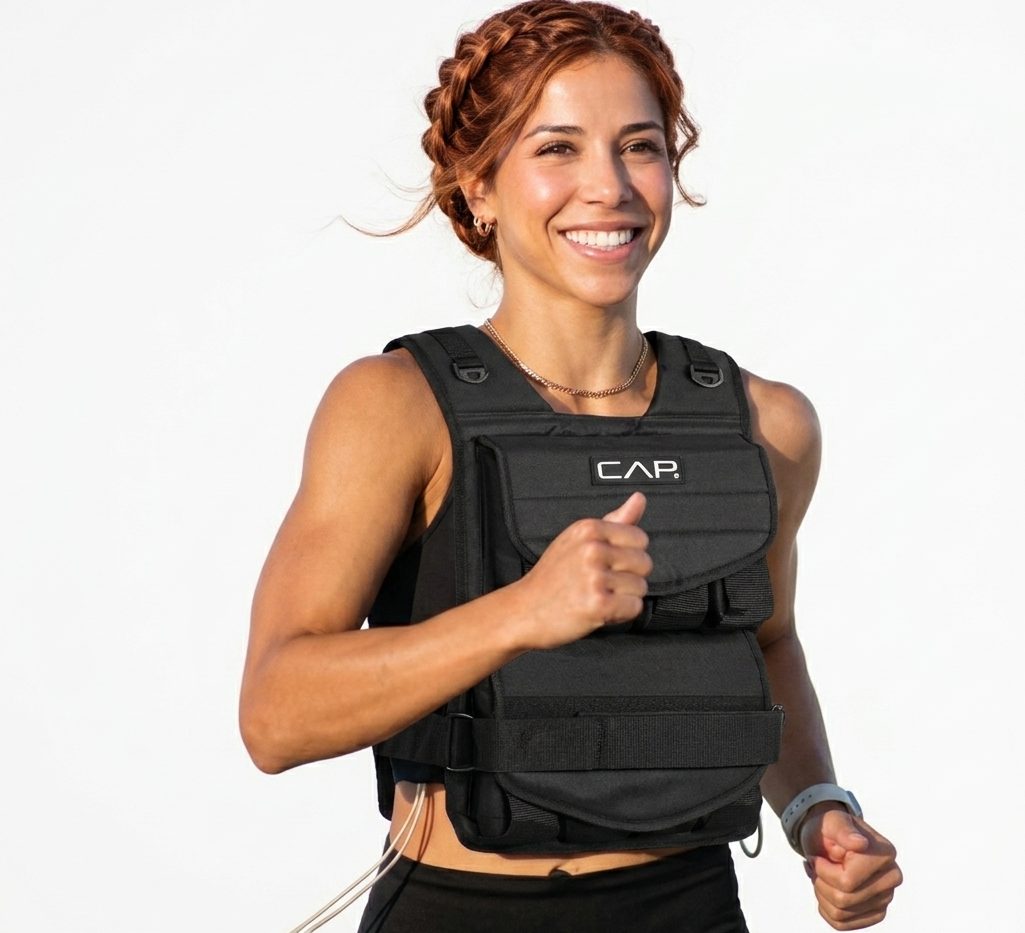
2. CAP Barbell Adjustable Weighted Vest (20 lbs)

Quick Verdict
A budget-friendly, no-frills option from one of the most established names in fitness equipment. The CAP vest trades premium materials for accessibility and a lower price point, making it a solid entry-level choice — though durability concerns show up in longer-term reviews.
Key Features
- Adjustable weight using removable packets filled with iron ore fines (approximately 2.5 lbs per packet)
- Breathable mesh construction with neoprene padding for comfort
- Adjustable waist belt and padded shoulder straps for a one-size-fits-all fit
- Includes anchor hooks for parachute run training and reflective strips for low-light visibility
- Backed by CAP’s 30+ years of fitness equipment manufacturing experience
Who This Product Is Best For
The CAP vest is best suited for beginners or casual users adding light resistance to walking, jogging, or bodyweight circuits. It’s a reasonable starting point for anyone testing whether weighted vest training fits their routine before investing in a heavier-duty model. Some verified reviews note stitching wear at the shoulder seams under sustained heavy use, so it’s better suited to lighter, consistent use than daily maximum-load training.
3. ZELUS Weighted Vest (Reflective, Iron Sand Fill)

Quick Verdict
A comfortable, budget-conscious vest built around soft neoprene and fixed iron-sand weight increments rather than removable plates. It’s one of the most popular entry points into vest training — best suited to those who don’t need heavy, progressive loading.
Key Features
- Available in fixed weight increments (6, 8, 12, 16, 20, 25, and 30 lb versions)
- Durable neoprene rubber construction with double-stitching and evenly distributed iron sand fill
- Dual storage: detachable front zipper pockets plus a rear elastic-mesh pocket for phone, keys, or cards
- Cushioned, non-chafing shoulder straps designed for extended wear
- High-visibility reflective stripes across the front, shoulders, and back
Who This Product Is Best For
ZELUS is best for walkers, joggers, and yoga or circuit-training users who want consistent, evenly distributed resistance without the bulk of removable iron plates. Because weight is fixed rather than adjustable within a single vest, it suits people who already know their target load rather than those planning to progressively scale weight over time within the same unit.
4. RUNmax Adjustable Weighted Vest (12–140 lb Range, Shoulder Pad Option)

Quick Verdict
The RUNmax stands out for sheer scalability — this specific listing covers a weight system that ranges from 12 lbs up to 140 lbs depending on the version purchased. It’s a well-proven choice for rucking and long-distance training specifically.
Key Features
- Adjustable, removable weight system (specific max capacity depends on the version selected at purchase, from 12 lbs up to 140 lbs)
- Built from durable, breathable nylon with reinforced stitching
- Optional shoulder pads available for reduced chafing on long rucks or runs
- Includes a phone pocket and a water bottle holder (fits bottles 16 oz or smaller)
- One-size-fits-most design with adjustable straps
Who This Product Is Best For
RUNmax is the top choice for ruckers, distance walkers, and anyone planning long training sessions where hydration access and comfort over hours matter as much as raw load. The optional shoulder pads make it noticeably more comfortable than fixed-strap competitors during extended wear, and the wide weight range means the same vest can realistically follow a user from beginner to advanced loading, depending on which capacity is purchased.
5. Eric Flag Weighted Vest (Adjustable, 40 lb)

Quick Verdict
A compact, close-fitting vest from a France-based brand popular in the calisthenics and street workout community. Its 1000D Oxford nylon shell and precise 2.4 lb iron weight increments make it a solid, no-bounce option for bodyweight training specifically.
Key Features
- Adjustable up to 40 lbs using 16 removable 2.4 lb iron weights (8 front / 8 back)
- Made from heavy-duty, tear- and abrasion-resistant 1000D Oxford nylon
- Extremely lightweight shell at just 1.6 lbs empty, contributing to a close, low-bounce fit
- Adjustable strap designed to fit a wide range of body shapes
- Complete kit includes vest, weights, adjustable strap, and a user manual; hand-washable
Who This Product Is Best For
Eric Flag is best suited to calisthenics and street workout athletes doing pull-ups, dips, and bodyweight circuits where a snug, close-to-body fit matters more than maximum weight capacity. Its lighter empty-shell weight and compact profile make it less bulky than heavier-duty rucking vests, which is exactly the tradeoff serious bodyweight trainers tend to want.
Head-to-Head Comparison Table
| Feature | MVRK | CAP Barbell | ZELUS | RUNmax | Eric Flag |
|---|---|---|---|---|---|
| Max Weight | 35 lbs | 20 lbs | 6–30 lbs (fixed by version) | 12–140 lbs (by version) | 40 lbs |
| Weight Type | Removable iron blocks | Removable iron ore packets | Fixed iron sand fill | Removable weight system | Removable iron weights |
| Weight Increment | ~2.18 lbs/block | ~2.5 lbs/packet | Fixed per model | Varies by version | 2.4 lbs/weight |
| Shell Material | 1000D nylon + TPE foam | Breathable mesh + neoprene | Neoprene rubber | Durable nylon | 1000D Oxford nylon |
| Shoulder Padding | Wide, padded straps | Padded straps | Cushioned straps | Optional shoulder pads | Standard adjustable strap |
| Storage Pockets | Not specified | Not specified | Front zip + rear mesh pocket | Phone pocket + water bottle holder | Not specified |
| Reflective Strips | Not specified | Yes | Yes | Yes | Not specified |
| Fit Type | Adjustable, no-bounce | One-size-fits-all | One-size-fits-most | One-size-fits-most | Adjustable, all body shapes |
| Empty Vest Weight | Not specified | Not specified | Not specified | Not specified | 1.6 lbs |
| Best For | Calisthenics, HIIT | Beginners, light cardio | Walking, jogging, yoga | Rucking, long-distance training | Calisthenics, street workout |
| Warranty | Lifetime material-defect guarantee (brand site) | Manufacturer warranty | SGS-tested materials | Lifetime warranty | Not specified |
If you want maximum long-term scalability and comfort for rucking or distance training, the RUNmax is the strongest all-around pick thanks to its wide weight range and optional shoulder pads. For calisthenics and explosive bodyweight training, the MVRK and Eric Flag both offer close, no-bounce fits — MVRK leans slightly more heavy-duty, while Eric Flag is lighter and more compact. If you’re just getting started or want a low-cost way to add resistance to walks and light cardio, the CAP Barbell and ZELUS are both accessible entry points, with ZELUS offering better comfort and storage features at a similar price tier.
Product details and specifications are based on manufacturer listings and verified customer reviews at the time of writing and may change. Always check the current Amazon listing for the most up-to-date pricing, weight options, and availability before purchasing.
Leave a Reply